Dacor StormWash poor cleaning is a complaint with an unusual shape: the machine is built with more washing hardware than a conventional dishwasher, so when results drop, the cause is rarely a lack of washing power. StormWash+ is a dual intensive wash-arm system, aimed deliberately at heavily soiled items. When it stops delivering, the reason is almost always something blocking water from reaching the load — and that is a short list of checks anyone can work through.
What the system is doing differently
A conventional dishwasher relies on rotating arms that sweep the whole cavity evenly. StormWash+ adds dedicated intensive arms directed at part of the load, so pans and heavily soiled items can be cleaned in the same cycle as everyday dishes rather than needing a separate pre-wash.
That design has a consequence people miss: the machine is no longer indifferent to where things go. The intensive zone is a place, and putting the roasting pan somewhere else means it gets the ordinary treatment while the intensive arms scour a stack of side plates. Half the “cleaning has got worse” calls on machines with this feature are solved by loading the dirty items into the zone designed for them.
The four checks, in order
1. Arms turn freely. With the machine off, spin every arm by hand through a full rotation, including the intensive ones. A tall item, a handle hanging through a rack, or a pan lid can stop an arm dead, and an arm that cannot turn washes one stripe of the cavity and nothing else. This is the single most common cause and it costs nothing to check.
2. Jets are clear. Lift each arm where the design allows and hold it to the light. Blocked holes show as dark slots among clear ones. Clear them with a soft brush or a wooden toothpick; never enlarge one with anything metal, because a jet that has been opened up sprays weakly at that point forever.
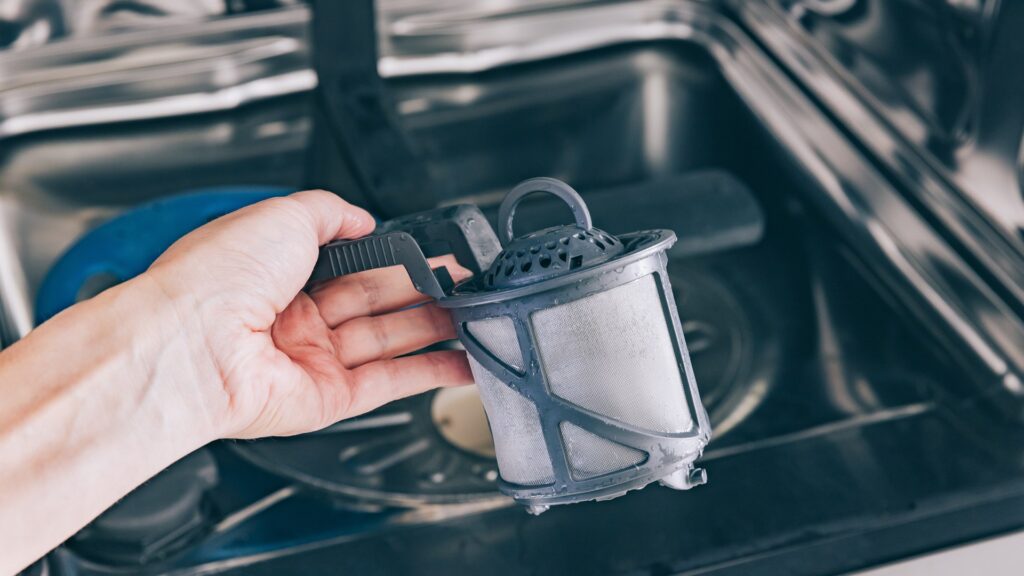
3. Filter and sump. Lift out the filter assembly, rinse it under a tap, brush the mesh, and check the sump beneath for glass, labels and seeds. A loaded filter does not stop the machine — it recirculates the debris it should have removed, which is why the symptom is gritty dishes rather than a fault code.
4. Water treatment. If the complaint is film and cloudiness rather than food residue, the wash arms are not the issue. The built-in softener needs salt and needs the local hardness set correctly, and rinse aid decides whether water sheets off or dries in place. Our page on dishwasher repair tips covers the settings.
Telling the two failures apart
That last row matters. If results dropped suddenly and the cycle also got shorter, the machine is not finishing its program, and the site’s page on check codes is the right place to start rather than the arms.
Loading for a machine with intensive arms
Three habits get the most out of this design, and none of them require any change to the appliance.
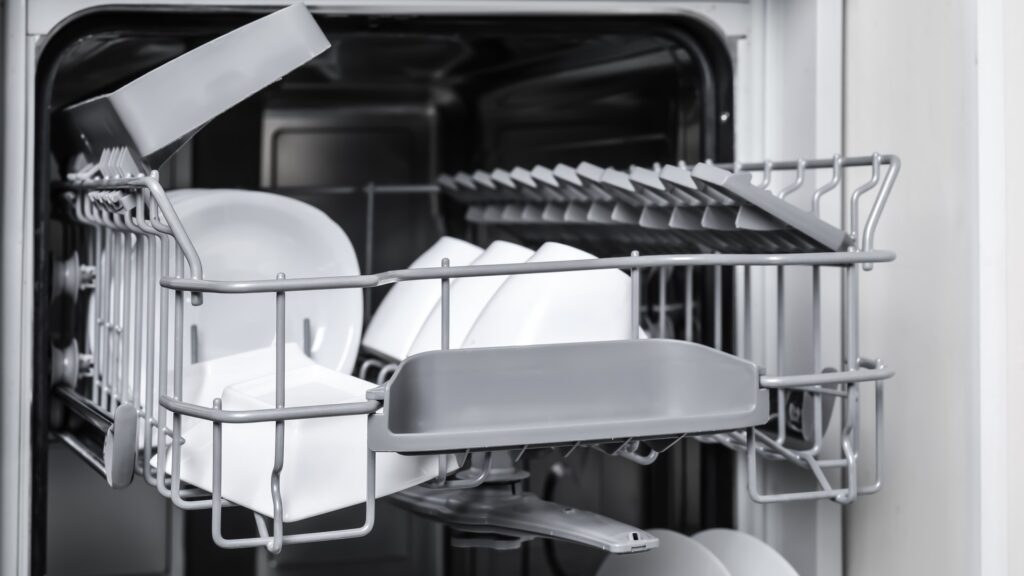
Face the soil toward the arms. Bowls and pans angled down and inward, not stacked upright. Water travels in straight lines, and a surface that cannot be seen from below cannot be reached from below.
Do not nest. Two bowls resting inside each other come out with a dirty inner face every time, whatever the machine does. The same is true of cutlery packed all facing the same way in a basket.
Leave the dispenser path clear. A tall pot handle or a cutting board in the lower rack can block the flap, and the cycle then runs with plain water while everything else looks normal.
Scraping rather than rinsing is the right pre-treatment. Modern detergents need something to work on, and a load that has been rinsed clean under the tap can actually come out worse, with a fine film left behind.
Detergent, which is more variable than people think
Three detergent situations produce complaints that look like a machine fault:
- Old tablets. Enzymes degrade. A box that has been open in a damp cupboard for a year cleans noticeably worse than a fresh one.
- Dispenser blocked. If the dispenser flap is obstructed by a tall item in the lower rack, the tablet stays in its compartment and the cycle runs with plain water. Check the flap can open freely with the machine loaded.
- All-in-one tablets in hard water. They do not replace the softener, and in genuinely hard water a machine run on tablets alone scales up and gradually washes worse.
What good looks like on this machine
With arms free, jets clear, filter clean, softener set and the dirty items in the intensive zone, a normal program should leave everything clean and everything except plastics dry. If it does not, the remaining candidates are the circulation pump, the heater, the diverter that directs water between arm sets, or a control fault — and those are measured rather than guessed at.
One caution before booking a visit: run the four checks properly, not quickly. We see machines where the arms were “checked” while the racks were out, and the item fouling an arm only exists when the machine is loaded the way the household actually loads it.
When to call
Call when results stay poor after the four checks, when only part of the load ever comes out clean, when the cycle is much shorter than it used to be, when the dispenser is opening but detergent remains, or when a check code appears.
We are an independent repair company and not a factory service arm. Pricing starts from a diagnostic visit and we confirm the estimate before any work begins. Dacor dishwasher repair covers pumps, heaters, diverters, sensors and controls, and you can schedule a visit online.