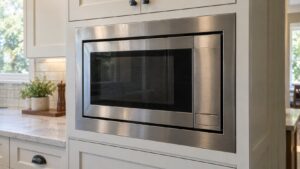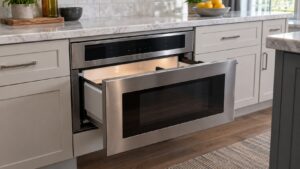
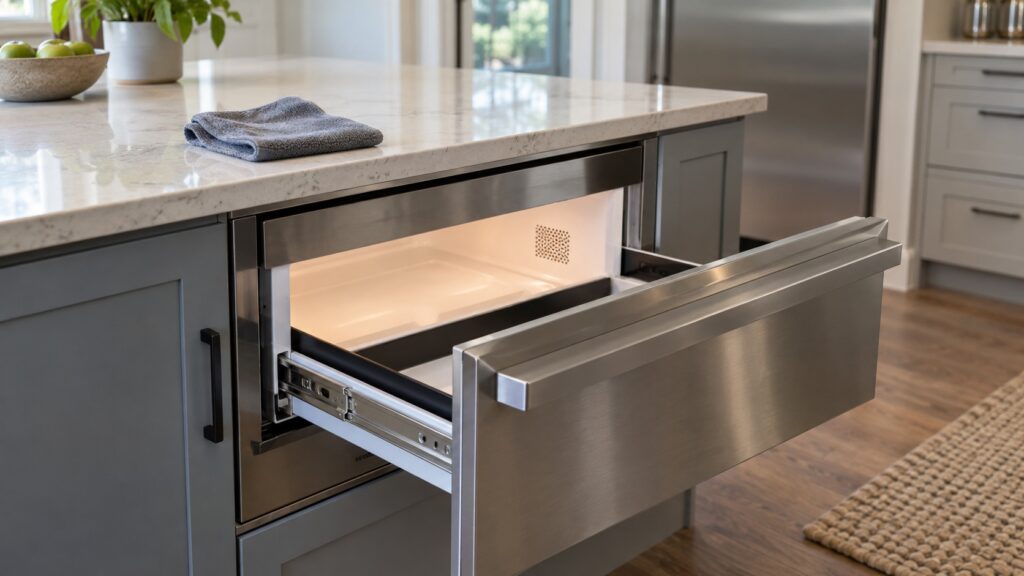
Dacor microwave maintenance is four small jobs: steam and wipe the cavity after spills, wash the turntable and roller ring, keep the door seal and latch edges clean, and on an over-the-range model wash the grease filters monthly and change a charcoal filter on schedule. Unplug before touching the vent area, never run the microwave empty and never use abrasive pads on the interior.
A microwave looks like the most maintenance-free appliance in the kitchen, and that is why it gets neglected. Splatter bakes onto the walls, grease clogs the vent filters and crumbs gather in the door seal, until the appliance sparks, smells, runs weakly or refuses to close. Most of that is preventable with a few minutes a month. This guide to Dacor microwave maintenance covers the routine for both drawer and over-the-range models: what to clean, how often, what to avoid and the warning signs that mean cleaning is not enough. Layouts differ between models, so follow your manual where it is specific.
How do I clean the inside of a Dacor microwave?
Use steam. Put a microwave-safe bowl with a cup of water and a splash of white vinegar or a few lemon slices inside, run it on high for three to five minutes and leave the door shut for another five. The steam loosens baked-on splatter, and a damp cloth then wipes it away in one pass. Wipe the ceiling, walls and floor, and pay attention to the area around the door opening, where grease collects. Dry the cavity before the next use.
Avoid scouring pads, harsh chemical sprays and oven cleaner on the interior, because they scratch the surface and can damage the coating on the cavity walls. Do not spray any liquid into the vent slots or at the control panel. Small cooking spills should be wiped up when the microwave is cool, since dried-on food can absorb microwave energy unevenly and may cause a hot spot or arcing. The page on a microwave sparking inside lists cleaning-related causes.
How do I care for the turntable, the roller ring and the door seal?
Lift out the glass turntable and, if there is one, the plastic roller ring beneath it. Wash both in warm soapy water and dry them. Wipe the floor of the cavity where the ring runs, because crumbs there make the plate rattle or stick. Put the ring back before the plate, and check that the plate seats correctly on the hub. A plate that rides crooked or a ring that is dirty is a common reason a turntable stops turning, and our page on the microwave turntable not turning covers it.
The door seal and the edges of the opening matter for safety and for closing properly. Wipe the seal, the latch hooks and the frame with a damp cloth, since food in the latch area can stop the door from closing fully. A door that will not latch can also stop the microwave from starting; see the page on the door won’t latch. If the door is bent, the seal is damaged or the latch is broken, stop using the microwave and book service.
How do I maintain the vent and filters on an over-the-range model?
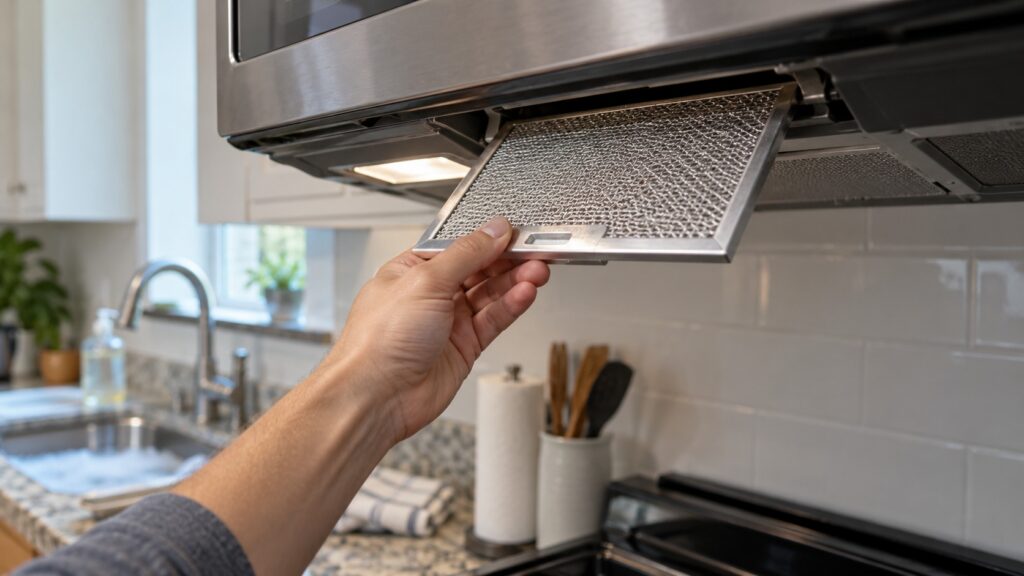
An over-the-range microwave also acts as a range hood, and the filters do the work of capturing grease. Unplug the microwave or switch off its breaker before you reach into the vent area. Slide out the metal grease filters, usually from the underside, and wash them in hot water with dish detergent or in the dishwasher if the manual permits. Dry them fully before putting them back. Filters that are caked with grease cut airflow, which makes the fan seem weak, and they are a fire risk.
If the microwave recirculates air instead of venting outside, it has a charcoal filter that cannot be washed and must be replaced on a schedule; the manual gives the interval, commonly several months to a year depending on use. Wipe the vent grille and the underside lamp area. If the fan runs but moves little air, read the page on a vent fan that is not exhausting. For duct and cutout issues, the Dacor microwave installation guide explains how the venting should be set up.
What is different for a Dacor drawer microwave?
A drawer model has a motorized drawer that slides out on a track. Keep the area in front of it clear, avoid overfilling the drawer or leaving large dishes that hit the housing, and wipe the front and the track area occasionally with a damp cloth. Crumbs and spills in the track can slow or jam the drawer. If the drawer stops opening or closing, the guide to a Dacor drawer microwave that won’t open or close goes through what to check. Wipe the stainless front with a soft cloth along the grain and a stainless cleaner that is safe for the finish.
How do I use the microwave in a way that avoids problems?
Never run the microwave empty, because with nothing to absorb the energy it can damage the magnetron. Use only microwave-safe containers, no metal or foil unless the manual allows it, and cover food to limit splatter. Use the sensor features sensibly and read the Dacor microwave tips for how they behave. If the display shows only a general error message and nothing else, the guide on why a Dacor microwave only says error explains why there is no detailed code.
When is cleaning not enough?
Call for service if the microwave sparks with a clean, empty cavity, makes a loud buzzing noise, runs but does not heat or shows an error that returns. If an older unit needs repeated repairs, the Dacor microwave repair-or-replace guide helps you compare. The inside of a microwave contains a high-voltage capacitor that stays charged after unplugging, so never open the case. See Dacor microwave repair or schedule a visit.