Dacor oven rack installation is a matter of seating each rack squarely on its side guides, fully back and level, with the oven off and cool. Which positions your oven offers, how the racks lock and whether any rack is meant for a particular mode are set out in the owner’s manual for your model, and we do not list numbered positions here. What we can explain is the general logic of rack placement, why it changes how food bakes, and what to do when a rack will not seat properly.
How do you install a rack in a Dacor oven?
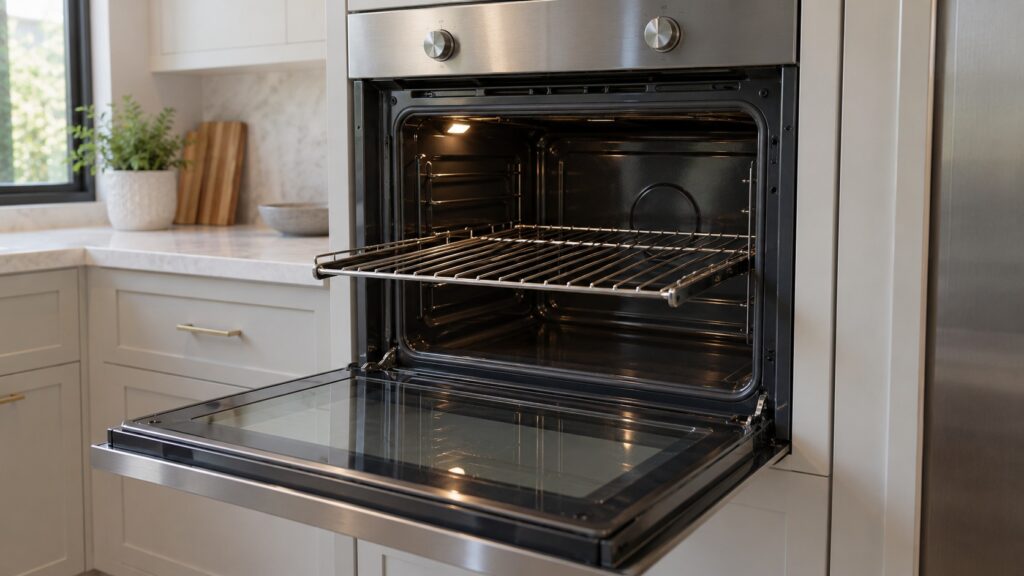
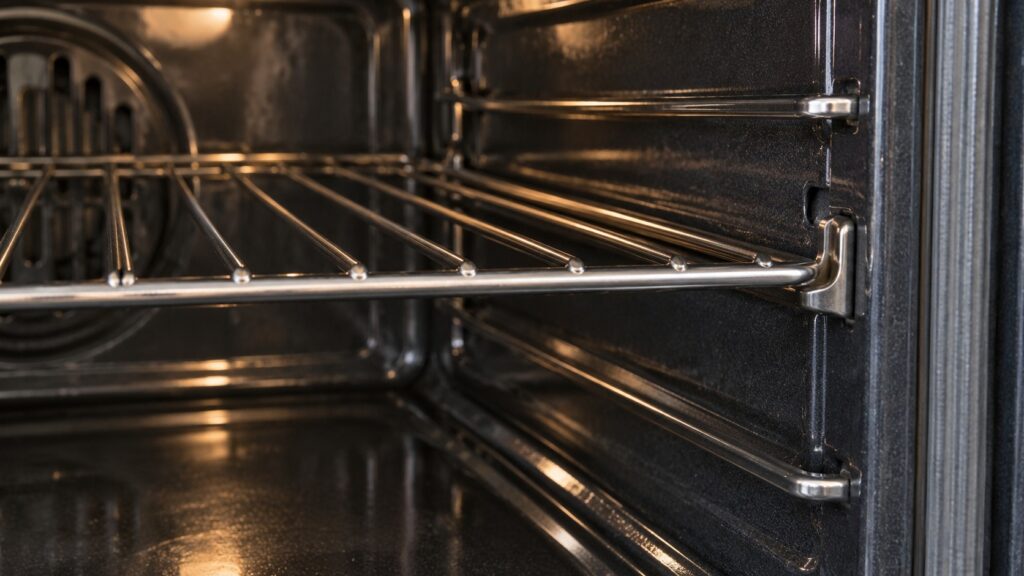
Treat it as a four-step habit. First, make sure the oven is off and completely cool, since the cavity and the racks stay hot long after cooking. Second, choose the position for the food you are cooking, using your manual and the recipe. Third, slide the rack onto the guides on both sides of the cavity at the same height, so it does not tilt. Fourth, push it fully back and check that it sits level and does not rock before you put the food on it. A rack seated on one guide and resting on the next one down, or only partly pushed in, can tilt, and a tilted rack can tip a pan.
The way Dacor racks lock, tilt or glide differs between ovens, and our pages do not describe a single method, so we will not guess at one. If your rack has a stop or a catch, the manual shows how it engages. Never reach into a warm cavity without oven mitts, and do not force a rack that resists.
Which rack position should you use?
The general principle holds in most ovens, and your manual gives the specifics. Food on a higher rack sits closer to the top element or the top of the cavity and browns on top faster; food on a lower rack sits closer to the bottom and browns underneath faster. A middle position is the usual starting point for even baking. For several trays at once, convection helps, and our uneven-baking page names two things to check: using a rack position that does not suit the recipe, and crowding pans too close together, which blocks air circulation regardless of how well the oven is working. Leave space between pans and around the edges.
If one side of a rack keeps browning more than the other, rotate the pan partway through as the recipe suggests. Our oven baking unevenly page explains when persistent unevenness points to the convection fan, an element or a sensor rather than to rack placement.
What if a rack will not slide in or sits crooked?
Stop and look before you push harder. A rack that sticks can be caught on a bent wire, can be on the wrong pair of guides, or can be meeting a spill that has baked onto a guide. Check that the rack faces the right way as your manual shows, that both sides sit on guides of the same height, and that the guides are clean and free of debris. A rack that is bent or warped from heat or a heavy load may not seat properly and is better replaced than forced. Do not file, bend or modify a rack, and do not remove any part of the oven wall or guide assembly to free it.
A crooked rack inside a door that will not close flush is a different matter. If the door seems not to seal, our page on an oven door that will not seal covers the checks, because a rack or pan sticking out can hold the door open.
Where do you get the right racks and positions for your model?
From your owner’s manual and the model number on the rating plate. Our wall oven installation guide notes that on Dacor ovens the rating plate sits on the inner side of the door trim for at least one range model we have looked at, so check where yours is before you need it. If you have lost the manual, search the maker’s documentation for your model number. A rack from a different oven may fit the guides and still be the wrong size or finish, so do not assume that one rack suits any Dacor oven. Our page on which generation of Dacor you have helps you identify what you own.
How do you keep racks and guides in good condition?
Wipe cooled racks and guides with a damp cloth and a mild cleaner, rinse and dry them, and clear spills before they bake on. How to handle the racks before a cleaning cycle, including whether to remove them for a self-clean or for the steam-based GreenClean on models that have it, is in the manual and differs by model. Our wall oven maintenance guide covers the routine that keeps an oven out of trouble. Do not use harsh sprays near the control panel.
When should you call a technician?
Call if the oven is damaged inside, if a guide is loose or bent, if racks will not seat on a clean guide, or if food bakes unevenly with correct rack placement and a good door seal. Do not remove the oven’s interior panels or the back wall. If you smell burning or see sparks, switch off the oven’s breaker at the panel while standing on a dry floor. Our Dacor oven repair page explains what a visit includes.