Dacor wine column dual-zone cooling keeps two separate temperature zones inside one cabinet, so a red served at cellar temperature and a sparkling wine served much colder can sit in the same unit without either one warming or cooling the other. That is only possible because the column is built around two sealed compartments rather than one open interior — dual-zone cooling is a structural feature of the cabinet, not a setting you switch on inside a single compartment. Understanding how the two zones stay separate is the difference between troubleshooting a real fault and mistaking normal dual-zone behavior for a problem.
How does a Dacor wine column keep two zones apart?
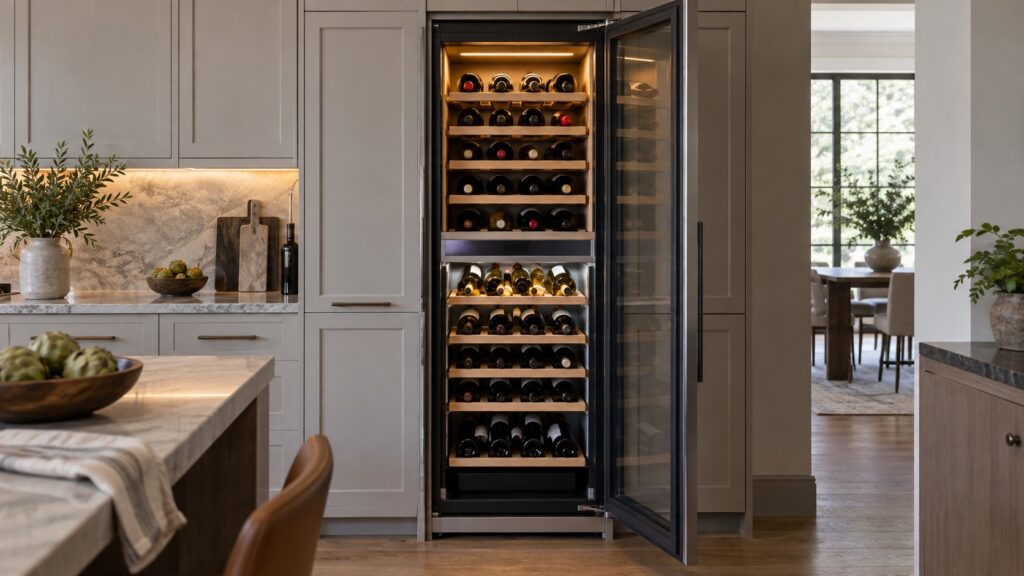
Inside the cabinet, an insulated partition physically separates the upper and lower compartments, and each side has its own temperature sensor and its own damper or duct controlling how much cold air reaches it. The column typically runs one sealed refrigeration system rather than two full compressors, and splits the cooled air between the zones through that damper arrangement — one zone can be run several degrees colder than the other because the airflow to each is throttled independently, not because there are two separate cooling systems working side by side.
Why do the two zones show different temperatures on the display?
Because that is what dual-zone cooling is designed to do. A typical setup holds the upper zone in the low-to-mid 50s°F for reds and the lower zone in the mid-40s°F for whites and sparkling wines, and the display for each zone reflects its own sensor reading independently. Seeing two different numbers on the panel is the system working correctly, not a fault — the mistake to avoid is comparing the two zones to each other and assuming a difference means one of them is broken. What actually indicates a problem is a zone drifting away from its own set point over time, or the shelves rattling and bottles failing to hold their temperature at all.
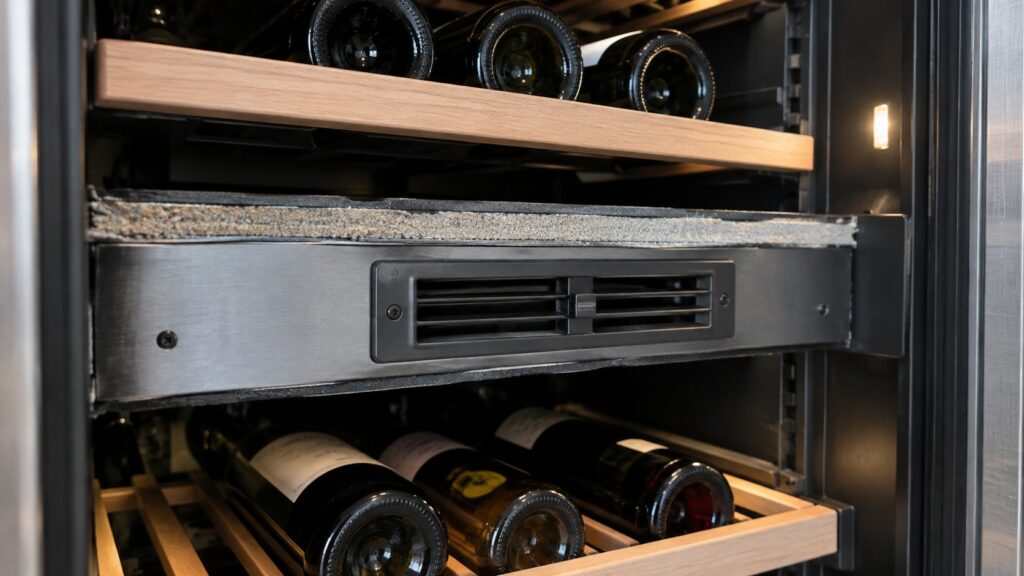
What happens if one zone’s damper fails?
A damper failure shows up as one zone drifting toward the other zone’s temperature, since the compartment that should be running colder or warmer stops getting the airflow needed to hold its own set point. If both zones start reading close to the same temperature when they used to run several degrees apart, the shared cooling system is very likely still working — the damper controlling one zone’s airflow is the more likely point of failure, rather than the compressor itself. Our Dacor wine column zone diagnosis guide walks through separating a damper problem from a sensor problem on either side.
Does dual-zone cooling put more strain on the compressor?
Running two zones at different set points does ask more of the sealed system than holding one temperature throughout the cabinet, because the compressor still has to satisfy whichever zone is calling for more cooling at any given moment, while the damper on the other side throttles back. That is a normal part of how the column is designed to operate, not a sign of an oversized or undersized system, but it does mean the compressor on a dual-zone column can run more of the time than a single-zone unit of the same size. A compressor that runs constantly without ever satisfying either zone’s set point, rather than cycling normally, is a different problem worth a real diagnosis rather than an assumption about dual-zone design.
How does dual-zone cooling compare to a single-zone unit?
A single-zone Dacor wine column holds one temperature throughout the whole cabinet, which suits a household that stores one style of wine consistently but leaves no room to hold a red and a white at their proper serving temperatures at the same time. Dual-zone cooling exists specifically to remove that trade-off, at the cost of a slightly more complex cabinet — the partition, the second sensor, and the dampers all add points that can eventually need service, where a single-zone column has none of them. For a household that genuinely uses both zones at different set points, that added complexity buys real flexibility; for a household that would run both zones the same anyway, a single-zone column does the same job with less to maintain.
Can the two zones be set to the same temperature?
Yes — dual-zone cooling means the two compartments can be controlled independently, not that they must always differ. Setting both zones to the same target temperature is a normal use of the column, for a household that stores mostly one style of wine and wants the whole cabinet to behave like a single-zone unit. The physical partition between the compartments stays in place either way; only the two set points change, and each zone’s damper will simply hold near the same position as the other’s when the targets match.
What upkeep keeps dual-zone cooling working correctly?
The partition and door seals matter more on a dual-zone column than on a single-zone unit, because a seal leak on one zone lets warmer air from the room — or from the other zone, if the leak is internal — undermine the temperature that zone is trying to hold. Regular filter and seal checks, covered in our Dacor wine column maintenance guide, catch the drift before it reaches the point where a bottle is actually served at the wrong temperature. If a zone difference disappears entirely, or one zone stops responding to its own set point, that is the point to have the damper and sensor checked rather than adjusting the target temperature and hoping it corrects itself.
If your Dacor wine column’s two zones are not holding their separate temperatures the way they used to, our technicians can identify whether it is a damper, a sensor, or the shared sealed system before any part gets ordered. We are an independent repair company, not a factory service arm, and pricing starts from a diagnostic visit with the estimate confirmed before any work begins. Read buying a Dacor wine column if you are comparing models, or schedule a visit for an existing unit.