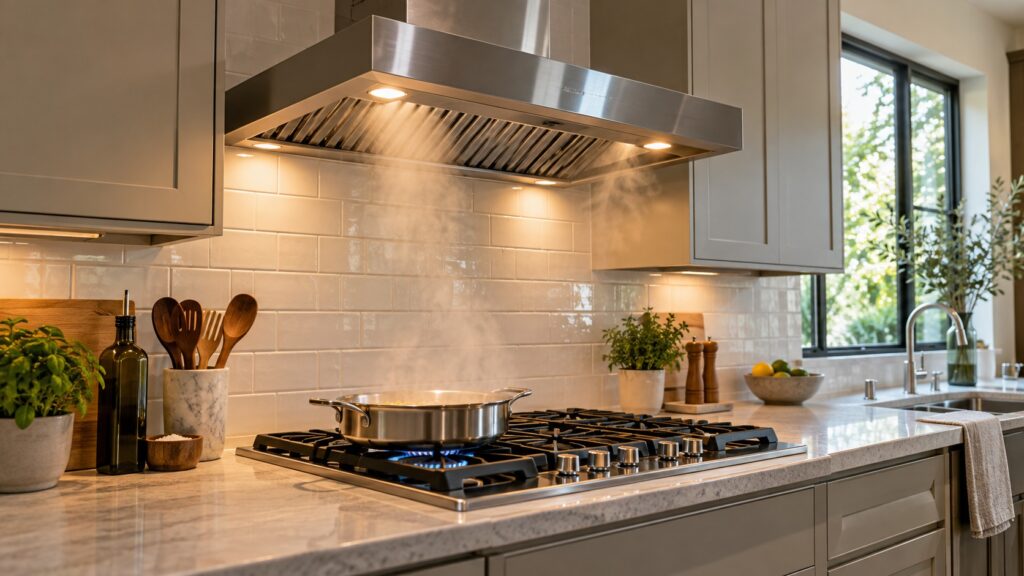
These Dacor range hood tips cover the two complaints that come up more than anything else: the airflow is weaker than it used to be, or the lights are not doing their job, and both are usually fixable with the kind of upkeep an owner can do without calling anyone. A range hood that has to work harder to clear the same amount of smoke and steam is telling you something is restricting airflow somewhere between the grease filter and the duct outlet; a hood with dim, flickering, or dead lighting is almost always a bulb or a connector rather than the hood’s control electronics. Keeping both in good order is mostly about a handful of habits repeated on a schedule.
Why does a Dacor range hood lose airflow over time?
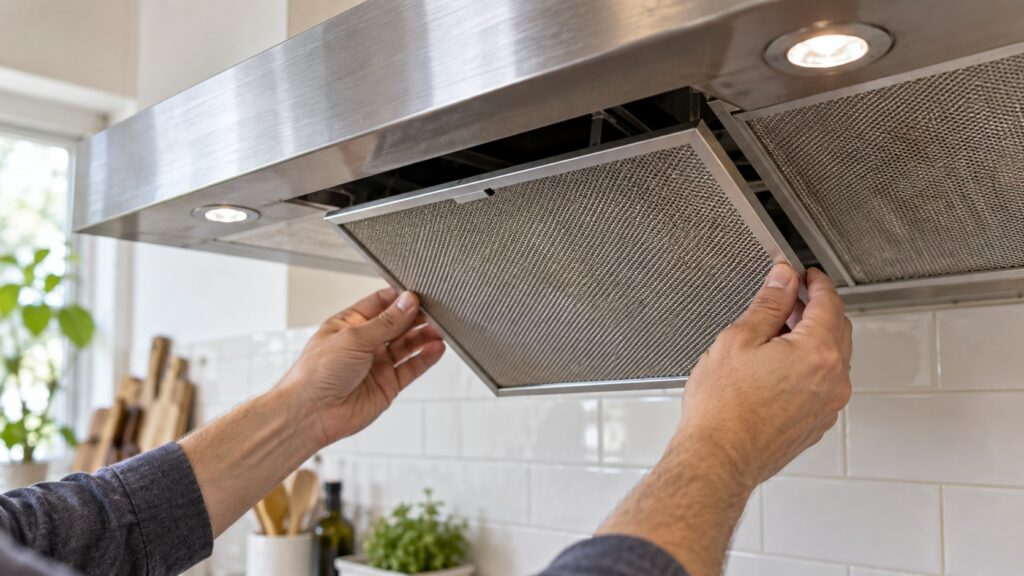
Airflow loss almost always starts at the grease filter, since it sits directly in the path of every bit of smoke and steam the hood pulls in, and a filter loaded with grease restricts flow the same way a clogged air filter restricts an engine. Beyond the filter, the duct run itself can accumulate grease residue over months of use, especially on a longer run with more turns, and that buildup narrows the effective duct diameter gradually rather than all at once — which is why a hood that “just started getting weaker” is usually reporting a slow buildup rather than a sudden failure. Our Dacor range hood maintenance guide covers the filter cleaning interval and the signs a duct inspection is overdue.
How often should the grease filter actually be cleaned?
For typical daily cooking, every two to four weeks keeps a metal mesh filter from building up enough grease to matter. A household that fries often, sears at high heat, or cooks with a lot of oil should clean weekly rather than wait for the interval to come around, because grease accumulates faster under those conditions than the general guideline assumes. A filter that has gone visibly gray or sticky, rather than staying reflective and clean-looking, has already gone past the point where it should have been cleaned — waiting until it looks obviously dirty means airflow has already been reduced for a while before anyone noticed.
What fan speed actually clears smoke, and what does not?
Matching fan speed to what is actually happening on the cooktop below matters more than most owners assume. Running the hood on its lowest speed while searing at high heat, or while frying, will look like weak airflow no matter how clean the filter and duct are — the hood simply is not moving enough air at that speed to keep up with that much smoke and steam. The fix in that situation is not a repair at all; it is running a higher speed for high-heat cooking and reserving the lowest speed for simmering or light cooking where less airflow is genuinely needed. A hood that stays weak even on its highest speed, with a clean filter and no obvious duct restriction, is the point where a fan or motor issue becomes the more likely explanation.
Why do the lights fail before anything else does?
Lighting sits in a hot, grease-exposed environment directly above the cooktop, which is a harder environment for a bulb than almost anywhere else in the kitchen, and it is also the component with the least protection from heat cycling every time the range below it runs. A single light going dim or dark first is normal wear on that one bulb; both lights failing at once, or a light that flickers rather than simply going dark, points more toward a connector or a driver issue than toward two bulbs coincidentally failing on the same day. Confirming the replacement bulb matches the hood’s rated type and wattage matters here — an incorrect bulb can flicker, run hot, or fail again quickly even when the fixture itself is fine.
Does the hood’s mounting height affect these tips?
Mounting height above the cooktop changes how much of the rising smoke and steam the hood actually captures before it spreads into the room, independent of anything wrong with the hood itself. A hood mounted higher than its specification recommends will show up as weaker-seeming performance even with a clean filter, a clear duct, and the correct fan speed, simply because more of the plume has dispersed sideways before reaching the hood’s capture area. If a hood has always seemed to underperform since installation, rather than gradually losing performance over time, checking the actual mounting height against the manufacturer’s recommended range is worth doing before assuming a mechanical fault.
What upkeep prevents most range hood complaints before they start?
Beyond filter cleaning, wiping down the hood’s exterior and the area immediately around the fan inlet keeps grease from building up where it is easy to see but easy to ignore, and it is a useful visual check for early signs of a duct or filter problem. If the hood is a downdraft-style unit built into the cooktop rather than mounted overhead, the retraction mechanism has its own separate upkeep, covered in our Dacor downdraft vent guide if that applies to your installation. For a hood mounted overhead, periodically confirming the duct connection at the roof or wall cap has not loosened or become blocked by debris rounds out the routine.
When does a range hood complaint need an actual repair visit?
If airflow stays weak on the highest fan speed after a filter clean and a duct check, or if both lights fail together with flickering rather than a clean burnout, those point toward the fan, motor, or wiring rather than routine upkeep. Our Dacor range hood repair or replace guide covers what to check next once basic maintenance has been ruled out as the cause.
If your Dacor range hood’s airflow or lighting has not improved after a filter clean and a fan-speed check, our technicians can confirm whether the fan, the duct, or the wiring is the actual cause before any part is ordered. We are an independent repair company, not a factory service arm, and pricing starts from a diagnostic visit with the estimate confirmed before any work begins. Schedule Dacor range hood repair or book a visit directly.