
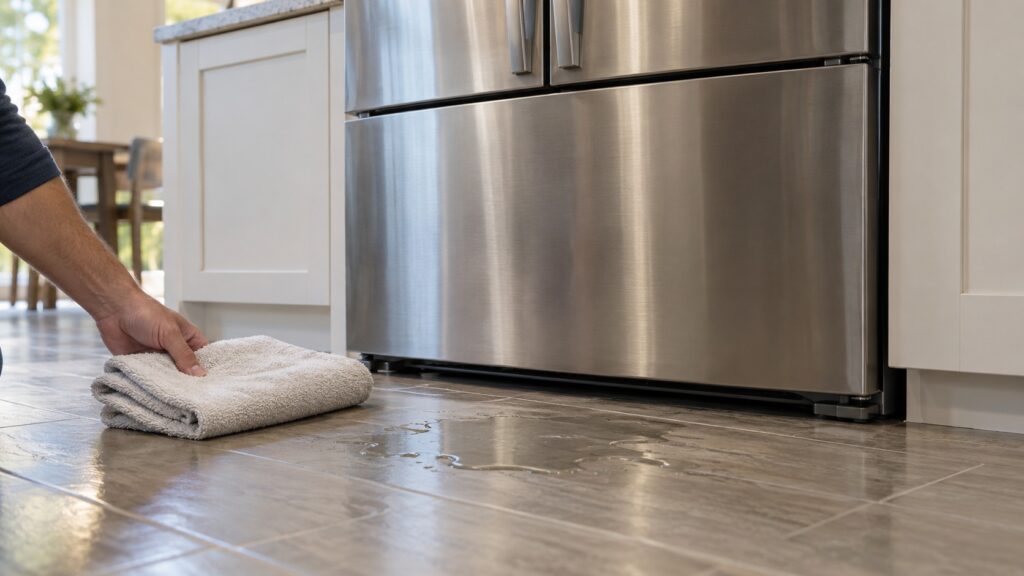
When a Dacor refrigerator is leaking water, where the water appears tells you the cause. Water on the freezer floor or under the crispers usually means a blocked defrost drain, a puddle at the front or back often points to the water line, filter or ice maker connection, and beads on the outside are condensation from humidity or a weak door seal. Close the water valve if the leak is steady, and unplug the refrigerator if water reaches the electrical parts.
A puddle under a refrigerator is alarming because the first guess is always the worst one: a failed sealed system or a burst line. In practice most leaks come from a short list of ordinary causes, and each leaves a recognizable trail. This guide to a Dacor refrigerator leaking water walks through the likely sources in the order that owners can check them, from the cheapest to the most involved, and explains which ones are safe to handle yourself. It applies to Dacor built-in and French door refrigerators; the exact layout of drains and water lines differs by model.
Where is the water coming from?
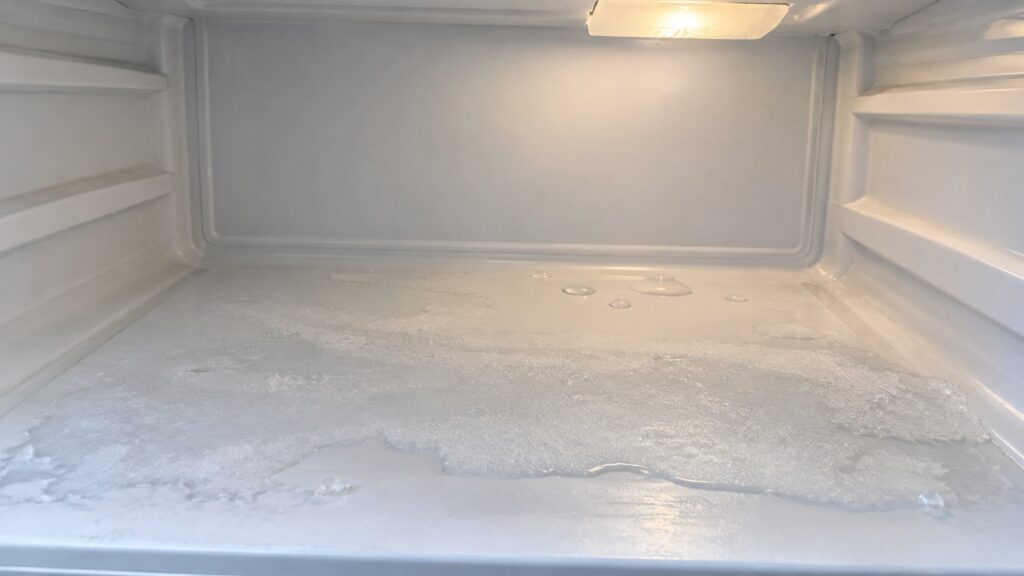
Before you touch anything, find the source. Pull out the lowest shelf bins and look inside. Is there ice or water on the freezer floor? Is the water under the crisper drawers or the glass shelf above them? Is it only on the floor outside, at the front or at the back? Is it dripping from the dispenser or the ice maker? Check whether the floor is wet only after the freezer runs a defrost, which suggests the drain, or all the time, which suggests a supply line or a filter. Take a photo of what you see, because it helps a technician later.
Could a blocked defrost drain be the cause?
This is the most common reason for water inside the cabinet. A frost-free refrigerator melts frost off its evaporator on a schedule, and the meltwater runs down a drain tube to a pan, where it evaporates. If food debris or ice blocks the tube, the water backs up, spills onto the floor of the freezer and often refreezes into a sheet of ice, and it may find its way into the fresh-food side. The page on a refrigerator excessive frost buildup in the freezer shows how this progresses.
An owner can try a gentle approach: unplug the refrigerator, empty the freezer, let the ice melt with the doors open and towels on the floor, then wipe the compartment dry. If the drain is open afterward, the leak may stop for weeks. If the ice returns quickly, a technician should clear the drain and check the defrost heater; do not use a sharp tool or a hair dryer on the liner, which is easy to crack.
Is the water line, filter or ice maker leaking?
A steady drip or a puddle that grows without any ice in the freezer suggests the supply. Check the shutoff valve and the line behind the refrigerator for dampness, and look at the joints where the tube meets the valve and the cabinet. A fitting that was not fully seated or a tube that was kinked when the refrigerator was pushed back can weep for months before anyone notices. If you find a drip, close the shutoff valve first, then dry the joint and re-seat the connection; our guide to the Dacor refrigerator ice maker water line goes through the line and the fill tube.
The water filter can leak if it is not seated or if the cartridge is old or cross-threaded. Remove and reinstall it following the instructions, and use the correct cartridge. A filter that is overdue for replacement also restricts flow and can make the system leak at the weakest point; the Dacor refrigerator filter replacement schedule shows when to change it. An ice maker that overflows or freezes up can also drip, which is described on the page for an ice maker not producing ice.
Is it condensation rather than a leak?
Water on the outside of the cabinet or the doors, especially in warm, humid weather, is often condensation. Warm moist air meets a cold surface and leaves beads of water. A door that does not close tightly lets humid air in, increases the condensation and can also build frost around the opening. Test the seals with the paper test: close a strip of paper in the door and pull it out; there should be a steady drag all the way around. If the seal is weak, clean it and check the alignment, then read the page on a refrigerator door not sealing and the one on condensation on exterior panels.
Check the level too. A cabinet that tilts backward or sideways can let water collect where it should run to the drain, and it can also stop the doors from closing on their own. A small adjustment at the feet often makes the doors seat better and the water run the right way.
What should I do right now if there is a leak?
Stop the water first. Close the shutoff valve to the refrigerator if the leak is steady. If water is near the compressor, the outlet or the plug, switch off the power at the breaker before you go near it. Move food into a cooler if the refrigerator must stay off. Mop up the water so the floor does not warp and do not let it run under cabinets. Then work through the checks above in order: drain, line, filter, seal.
A water leak can also affect cooling. An iced-over evaporator or a wet fan can raise the temperature, and an alarm may sound; the guide on the Dacor abnormally high temperature alarm explains what to do when that happens. If you are not certain what is leaking, or the refrigerator is old and has several issues, the repair or replace guide for a Dacor refrigerator helps you plan.
When should I call a technician?
Call if the leak returns after you have cleared the drain and re-seated the line, if ice keeps building, if water reaches the electrical parts, if you cannot find the source or if the sealed system is involved. A technician can trace the leak, clear the drain, test the heater and valves and fit a new part where needed. Note the model number and describe where the water appears. The Dacor refrigerator repair page shows what we check, and you can schedule a visit.