
A Dacor RealSteam oven adds a steam-equipped cavity to a conventional one, and the buying question is not whether steam cooks well — it does — but whether your household will use it enough to justify the extra hardware and the maintenance that comes with it. Steam means a water path, a generator and a drain: real components that need descaling and that can fail. This guide sets out what you get, what it asks of you, and who genuinely benefits.
What steam actually does in an oven
Dry oven air pulls moisture out of food. That is what you want for a roast potato and what you do not want for a loaf, a reheated portion of rice or a piece of fish. Introducing steam changes the cavity’s humidity, which changes how heat transfers and how the surface behaves.
Three effects are worth knowing:
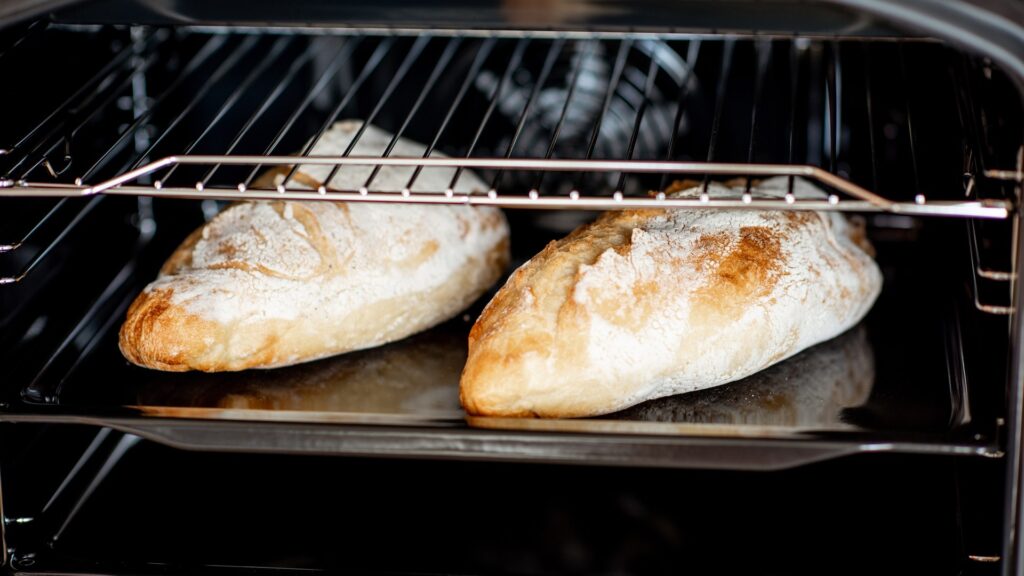
- Crust formation is delayed. Bread rises further before the crust sets, which is the reason bakeries inject steam at the start of a bake.
- Surfaces stay moist. Reheated food does not dry at the edges, and lean proteins stay tender at temperatures that would otherwise dry them.
- Heat transfers faster in humid air, so steam-assisted cooking is often a little quicker at the same temperature.
Combination cooking — steam plus conventional heat — is where most of the practical value sits: steam early for rise and moisture, dry heat later for color.
Who benefits, honestly
Households that bake bread get the clearest benefit. It is the one application where steam is not a refinement but the difference between a good loaf and a flat one.
Households that reheat a lot — batch cooking, meals at different times, leftovers as a routine — get the second clearest. Reheating in steam is markedly better than a microwave for texture and better than a dry oven for moisture.
Households cooking fish and vegetables regularly benefit, though a stovetop steamer does much the same for a fraction of the cost.
Households that roast, bake occasionally and otherwise reheat in a microwave will use the feature a handful of times and then stop. That is the honest outcome we see most often, and it is worth weighing before paying for the hardware.
What the feature asks of you
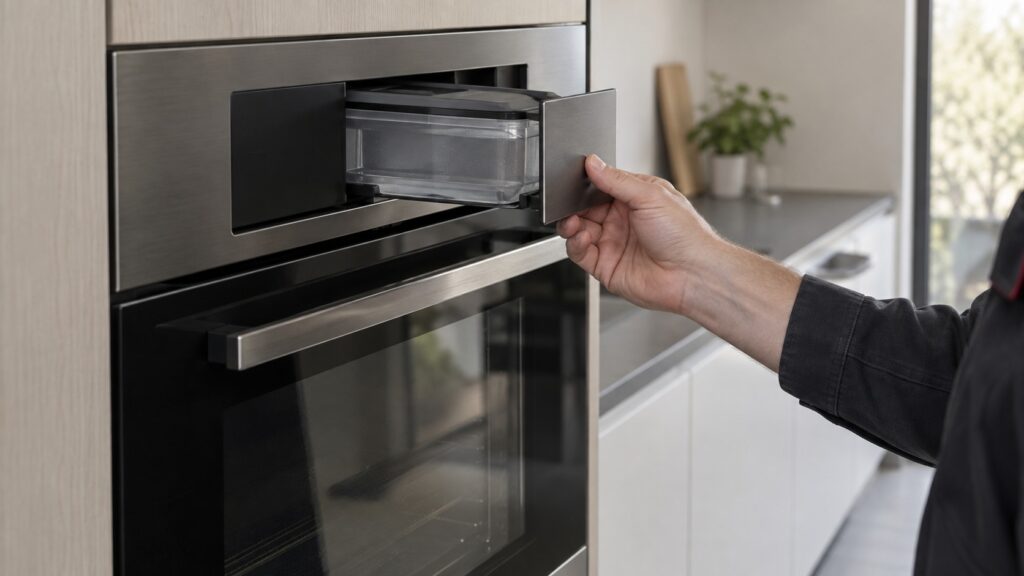
Water. Either a reservoir to fill or a plumbed supply. A reservoir means remembering; a plumbed supply means a connection at installation and a shutoff someone can reach.
Descaling. This is the one that matters. Every steam system scales, and the rate depends on your water. In a hard-water area, descaling on schedule is not optional maintenance — it is the difference between a system that lasts a decade and one that clogs in three years. Filtered water in the reservoir helps considerably where that is an option.
Drying out. A steam cavity should be wiped and left to dry after use. Left wet and closed, it develops odor and, over time, corrosion at seams and around the door.
Awareness of the water path. A steam oven has a drain route. If it is slow or blocked, water sits where it should not, and the symptom appears as poor steam rather than as a plumbing complaint.
What it adds to a service conversation
That last row is genuinely reassuring and worth stating: if the steam side fails, you still have an oven. The failure is a feature failure, and the decision about fixing it can be taken calmly.
Using it well, if you buy one
Steam rewards a little learning and punishes none. Three habits get most of the value in the first month.
Use combination settings rather than pure steam for anything you want browned. Pure steam cooks gently and leaves a pale surface; the sequence that works is steam first, dry heat to finish.
Reheat at a moderate temperature. The instinct is to reheat hot and fast, and in a steam cavity that dries the outside before the middle is warm. Lower and slightly longer gives a portion that tastes cooked rather than revived.
Proof dough in it if the oven offers a low-temperature setting with humidity. It is the application people discover last and then use most, because a warm humid box is exactly what dough wants and a kitchen in winter is not.
Comparing the alternatives
A dedicated steam oven as a second appliance does steam better and costs a cabinet opening. Sensible in a kitchen being rebuilt with space to spare, hard to justify otherwise.
A conventional oven plus a tray of water is what bakers did for a century and it still works, imperfectly. If bread is the only motivation, try it for a few months before spending anything.
A combination microwave reheats faster and does not bake. Different tool, not a competitor.
Whichever way you go, our page on feature names is worth reading first, because the same range uses several similar-sounding terms, and our guide on which generation you have matters if you are comparing a new model against one already in the kitchen. The site’s page on wall oven installation covers what the opening has to provide.
When to call
Call when steam output has weakened, when the oven reports a fill or water fault, when water remains in the cavity after a cycle, when descaling has been skipped for a long period, or when you want an existing oven assessed before deciding to replace it with a steam model.
We are an independent repair company and not a factory service arm. Pricing starts from a diagnostic visit and we confirm the estimate before any work begins. Dacor oven repair covers elements, sensors, steam systems, fans and controls, and you can schedule a visit online.