Dacor feature names appear on spec sheets, in the app and in service conversations, and almost none of them explain themselves. SteelCool, RealSteam, StormWash+, AutoRelease, FreshZone, SimmerSear, iQ RemoteView — each names a specific piece of hardware, and knowing which piece matters when something stops working. This glossary defines the ones that come up most, and says what each changes for an owner and for a technician.
Cooking features
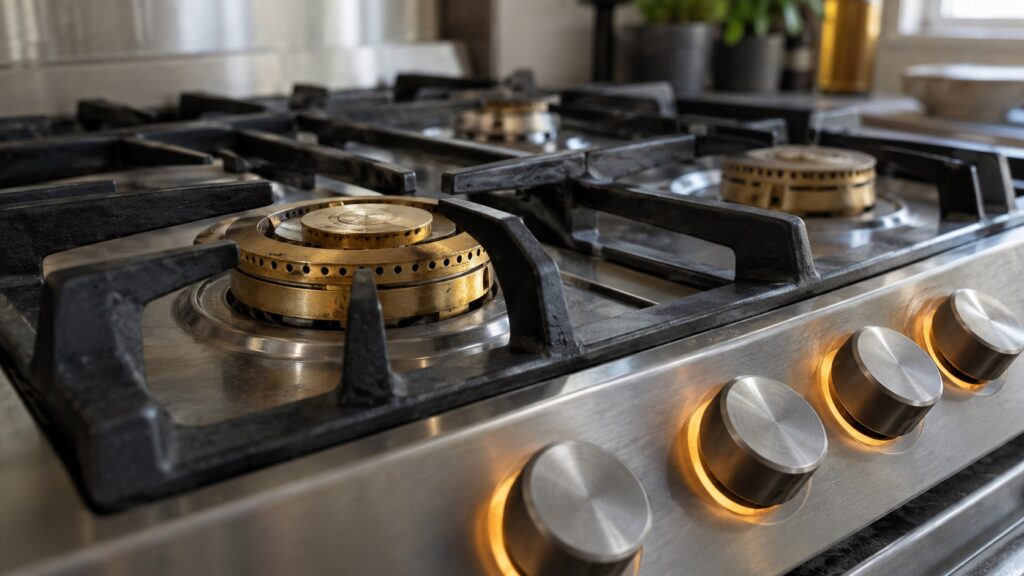
SimmerSear. The brass sealed-burner technology used across the rangetops and ranges — the same burner intended to hold a genuine low simmer and to deliver high searing heat. In service terms, a brass burner means the caps discolor with heat permanently and must not be cleaned with abrasives or acids.
Perma-Flame. Automatic reignition. If a flame is blown out — by a draft, a pot boiling over, a hood on high — the burner relights itself rather than leaking gas. A burner that clicks repeatedly while lit is often this system responding to an unstable flame rather than a fault in the igniter.
Illumina knobs. Control knobs that glow white when their burner is active. A useful safety cue, and a knob whose light has failed is a knob assembly matter, not a burner one.
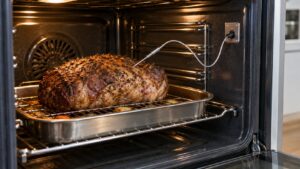
RealSteam. A steam-equipped oven cavity. Steam means a water reservoir or supply, a path, a generator and a drain — real components that scale up in hard water and that are absent from a conventional oven. Descaling on schedule matters here in a way it does not on a dry oven.
Pure Convection, four-part. A convection arrangement using multiple elements and fans rather than one. It bakes more evenly across a full cavity; it also means a convection fault may affect one region of the oven rather than all of it.
Refrigeration features
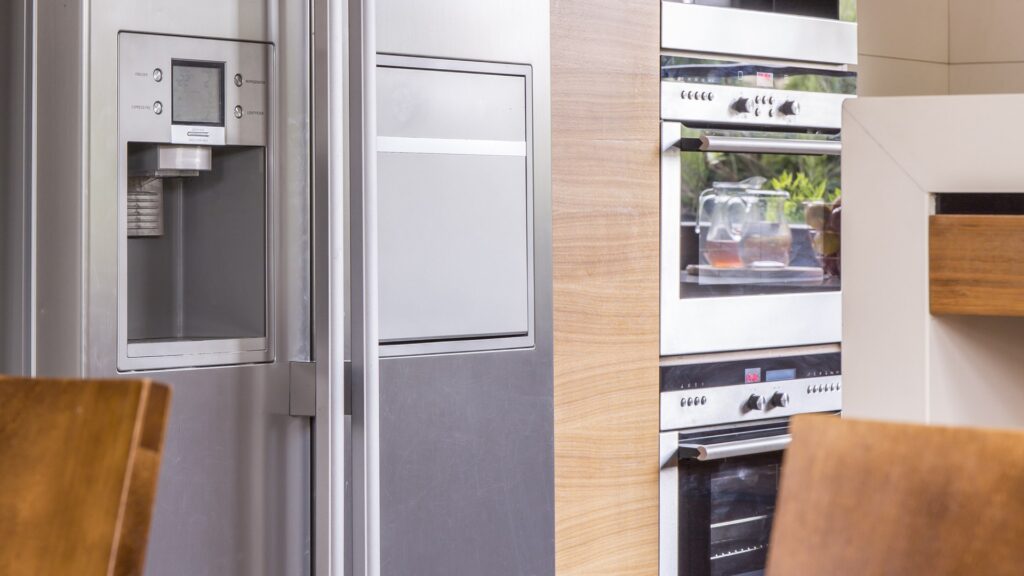
SteelCool. A stainless interior found on specific built-in models — the 48-inch and 42-inch panel-ready units carry it, while the base French-door line does not. It is a construction and finish choice. When comparing models, it is one of the two things that actually differ between otherwise similar sizes, the other being capacity.
PreciseCooling. A dedicated compressor and evaporator arrangement on column refrigeration, so a column holds its own temperature independently rather than sharing air with another compartment. It is why columns hold temperature so steadily, and it is why a fault in one column does not affect its neighbor.
FreshZone drawer. A separately controlled drawer within a column refrigerator, for items that want a different temperature from the main cavity. Its own sensor and damper, and therefore its own possible faults.
Push-to-Open. A door release for panel-ready installations with no visible handle. Press and the door releases. A door that no longer pops is this mechanism, not a seal problem.
iQ RemoteView. Interior cameras on paired column installations, viewable in the app. It is a convenience feature for checking contents remotely and — worth stating plainly — it has no bearing on a cooling problem by itself. Our guide on how RemoteView works covers what it can and cannot tell you.
Dishwasher features
StormWash+. A dual intensive wash-arm system: additional arms aimed at heavily soiled items rather than a single rotating arm doing everything. Poor results in a machine with this system usually point at loading or at blocked jets rather than at the pump.
AutoRelease. The automatic door-pop mechanism that opens the door slightly at the end of a cycle so moist air leaves and the load dries. It needs physical clearance in front of the door to operate, which is a genuine installation consideration — see our guide on the AutoRelease door.
Built-in water softener. An ion exchange unit inside the machine, with its own salt reservoir. It exists so hard water does not leave film on glass or scale on the heater, and it needs the local hardness set correctly to do its job.
Connectivity terms
Setting these up at installation — network placement, pairing, where the router actually is — saves a service call later, and our guide to connected appliance setup covers it.
Names that describe a platform, not a feature
A few terms in circulation do not describe anything you can point at in the kitchen. They describe the electronics generation an appliance belongs to, and they turn up in service documents and forum threads where owners then assume they are missing a feature.
Collection names — Modernist, Contemporary, Heritage — group appliances by styling and trim rather than by capability. Two ranges in different collections can share the same burners and the same oven cavity, and one collection is not a newer generation of another.
Legacy platform references appear in fault code discussions, where the same short code means different things depending on which control generation the appliance uses. That is the single most expensive confusion on this brand, and it is why a code found online is a lead rather than an answer.
Why the names matter in a repair conversation
Two reasons, and both save money. First, a feature name identifies hardware. Saying “the AutoRelease door does not pop” describes a mechanism; saying “the dishwasher does not dry” describes an outcome with half a dozen possible causes. The first books the right part.
Second, several of these names distinguish generations of appliance that look identical. The same brand has been built on different platforms over the years, and our page on which generation you have matters more here than on most brands — a code or a part number from the wrong era is a wasted visit.
When to call
Call when a named feature stops behaving as described — a steam cavity that will not generate steam, a door that no longer pops, a drawer that will not hold its own temperature, a burner that will not reignite — or when you are unsure which generation of appliance you own before ordering a part.
We are an independent repair company and not a factory service arm. Pricing starts from a diagnostic visit and we confirm the estimate before any work begins. Dacor oven repair covers elements, sensors, steam systems, fans and controls, and you can schedule a visit online.