
- 2.5L water tank
- All-metal interior
- Stainless burr grinder
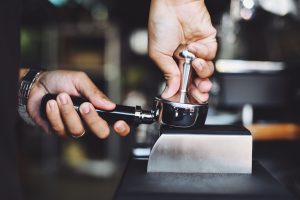
- Manual tamping, steam wand
The Dacor CM24TBISAS is a discontinued / legacy 24-inch built-in semi-automatic coffee system — no longer in production, but we still service it. Dacor built the CM24TBISAS as a 24-inch built-in semi-automatic coffee system. Dacor did not market the CM24TBISAS's platform under one of its named design collections in the sources behind this page, so no collection claim is made for it here. What a technician actually finds on the CM24TBISAS matches its listed features: 2.5L water tank; All-metal interior; Stainless burr grinder; Manual tamping, steam wand. On a model number like the CM24TBISAS, the 24 immediately after the prefix is the nominal size in inches — a pattern verified across dozens of real Dacor SKUs — but Dacor has not published an official decode for the rest of the string, so we do not guess at what any other letter position of the CM24TBISAS means. There is no independently confirmed rating-plate location for the CM24TBISAS or its appliance type, so the plate is usually found somewhere on a door edge, a door frame, or an interior wall — check those three spots and photograph the label before ordering parts. On a built-in coffee machine like the CM24TBISAS, descaling neglect is the single biggest contributor to boiler and flow-meter failures, ahead of any single component simply wearing out. The parts that go first on a built-in coffee system like the CM24TBISAS are the boiler/brew-group heating element, the flow meter that measures water passing through, and the internal grinder motor. What typically fails on a platform like the CM24TBISAS is the brew-group heater, a flow meter that has stopped reporting water flow accurately, or the steam-wand solenoid valve. Diagnosing the CM24TBISAS starts with checking the flow meter and the brew-group heater directly, since descaling neglect affects both and mimics a bigger electrical problem. The CM24TBISAS never shows an alphanumeric error code at all — Dacor's coffee system communicates in full-sentence messages instead, confirmed directly from the Automatic Coffee System Use and Care Manual: "Machine Ready - Drawer Out," "System Off - Front Panel Open," "Please Milk Clean," "Clean Group," a named "[Subsystem] Group Error," "Timeout Filling Up Broiler," "Flow Meter Error," "Error - Coffee Temperature" / "Error - Steam Temperature," and "Too Much Coffee." Some of these are routine reminders rather than problems — the milk-clean and group-clean messages appear on a schedule, not because anything has broken. This particular variant is supported by only a single retailer listing rather than a Dacor manual of its own, so treat its exact spec details as thin, reported once, and worth confirming against the unit in hand rather than as independently verified fact. As a Legacy Dacor product, the CM24TBISAS predates the September 2016 Samsung acquisition and runs on Dacor's own proprietary control architecture rather than anything Samsung-derived. The CM24TBISAS is a product of a brand with real history: Pasadena, California, 1965, three generations of family ownership, and then a September 2016 acquisition that made Dacor a wholly owned Samsung Electronics America subsidiary while it kept its own name and dealer network. Getting the CM24TBISAS repaired correctly starts with correctly identifying it — model number, generation, and platform — rather than assuming a code, a part, or a symptom seen on a different Dacor appliance carries over automatically. Worth saying plainly here: the CM24TBISAS listing itself is thin — supported by only a single retailer source in the research behind this site rather than a Dacor manual or a second independent listing — so treat any spec above beyond the model's existence as reported once, and confirm it against the physical unit before relying on it for a repair.

The CM24TBISAS belongs to the CM24 platform, which Dacor has discontinued. There is no successor, parts are finite, and that changes the repair-or-replace maths in a way no code table would. For step-by-step help see our repair guides; every documented unit has a page in the model directory, and full specifications live at www.dacor.com.