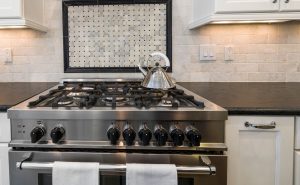
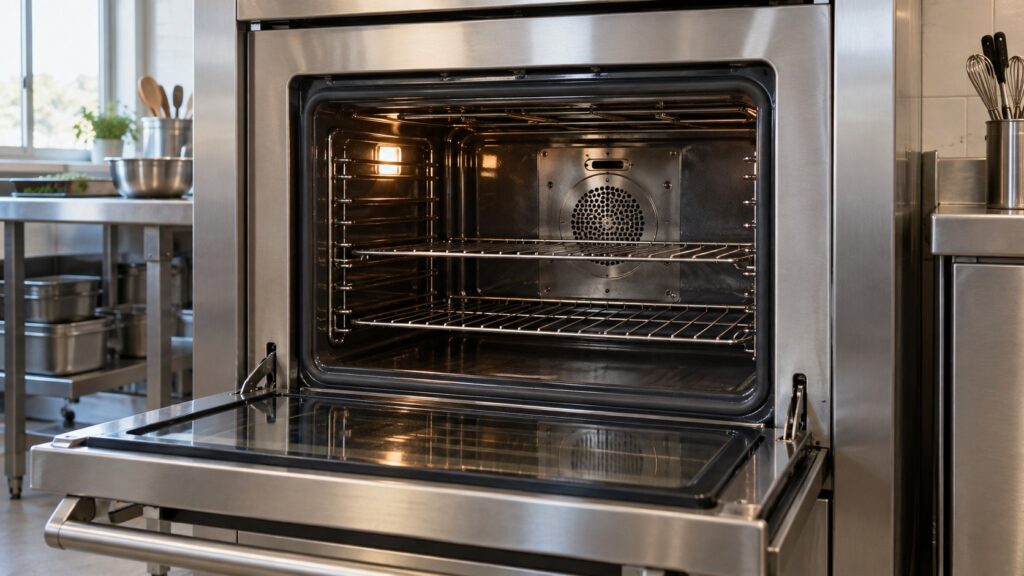
Dacor range C-72 points at the steam side of the oven: the control has either lost a believable reading from the steam sensor, or the steam system is not draining the way it should. C-70 sits next to it in the same part of the code table, and the two are documented together as cooling and drain related problems. Both belong to the Samsung-era Modernist Pro Range, the generation with steam-assisted oven functions, and neither of them is a burner problem or a bake-element problem, which is why chasing a heating fault after seeing one of them wastes a service visit.
What does C-72 mean on a Dacor range?
The steam function on this range needs two things to stay true at once: a sensor the control can trust, and a path for water to leave. C-72 covers the failure of either. On the sensor side, the reading has gone open or has drifted far enough that the control will not act on it. On the water side, the generator has filled or the cavity has produced condensate, and the drain hose and pump have not cleared it in the time the program allows.
That double meaning is why the code is not self-explanatory. Two households can see the same three characters for two completely different reasons — one has a sensor lead that has chafed against the cavity, the other has a drain hose that was kinked when the range was pushed back into its opening after a floor was replaced. The full page for this code lists the parts involved: read Dacor Range C-72 before ordering anything.
How is C-70 different from C-72?
C-70 is documented alongside C-72 rather than against it. The practical difference for an owner is small: both send you to the same water path and the same sensor group, and both stop the steam-assisted programs while leaving conventional bake and the burners alone. Where it matters is in what a technician looks at first. C-72 names the steam generator explicitly, so the generator and its sensor are the first stop. C-70 is framed as cooling and drain related, so the drain hose, the pump and the routing behind the range come first, and the generator is checked second.
The one thing not to do is treat either code as a general “oven is broken” signal. A range that shows a steam code will still bake, and using it that way for a few days while a visit is arranged is reasonable. Compare that with the temperature-sensor codes on the same platform, which stop the oven heating entirely — the difference is set out in oven F-codes versus C-codes.
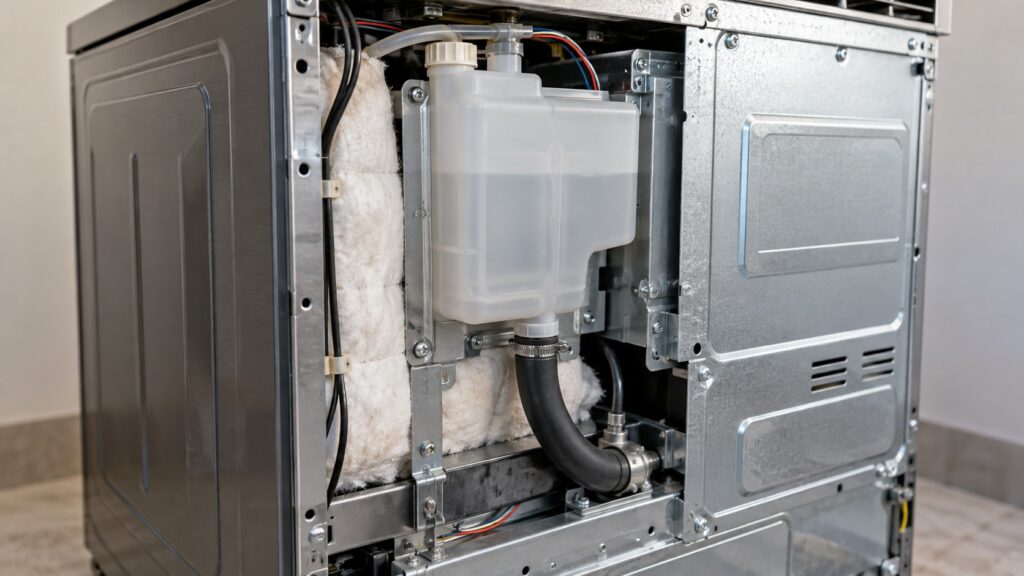
Which parts does the steam system actually use?
Four things carry water or a water reading, and each one fails in a recognizable way.
Scale deserves a separate word. A steam generator in a hard-water household collects mineral deposit exactly the way a kettle does, and the first sign is usually not the code — it is a steam program that takes longer than it used to, or a cavity that looks drier at the end of a cycle than it once did.
What can I check before calling?
Three checks are safe, and all three are outside the appliance.
First, the water supply. A range with steam functions is plumbed, and a shutoff valve that was closed during other work under the sink will produce a steam fault and nothing else. Confirm the valve is open and the line is not kinked.
Second, the reservoir, if your configuration uses one. It must be seated fully. A reservoir pushed in almost all the way behaves exactly like an empty one.
Third, a power cycle. Shut the range off at the breaker for a full minute, restore it, and run one short steam program. A code that clears and stays away for a week was a one-off reading. A code that returns at the same point in the same program is a real fault and is telling you where it lives.
Stop there. The water circuit and the generator sit behind the rear panel of a heavy, gas-connected appliance. Do not pull the range out to look at the drain hose yourself, and do not open the rear panel. Moving a range disturbs a gas connection, and that is a licensed job in most jurisdictions.
Why does the code come back after a steam bake?
Because the steam circuit is only exercised during programs that use it. A household that bakes conventionally six days a week and runs a steam roast on the seventh will see the code once a week and conclude it is intermittent. It is not intermittent — it is being tested once a week. The same logic applies after a self-clean, which is the hottest and longest thing the cavity does and the best test of a marginal sensor lead.
So when a code returns, record what was running. “C-72 during a steam roast, forty minutes in, twice in a row” is a far more useful sentence to a technician than “the oven throws an error sometimes,” and it often shortens the visit by an hour. If you are unsure which generation you own, the steam oven guide describes what the feature does and which models carry it.
When should a technician take over?
Call when the code returns after a power cycle, when the steam program stops early every time, when you can hear a pump running with no water moving, or when there is water under the range. The parts involved are behind the back panel, and the diagnosis is a measurement of the sensor circuit and a flow test of the drain, not a guess.
We are an independent repair company and not a factory service arm. Pricing starts from a diagnostic visit and we confirm the estimate before any work begins. Dacor range repair covers steam generators, drain pumps, sensors and control boards, and you can schedule a visit online.