Dacor auto reignition is a spark system that relights a gas burner if its flame goes out. When you turn a knob, a switch tells the ignition module to spark at the igniter beside the burner while gas flows; once the flame is steady the sparking stops, and if a draft or a boil-over blows the flame out, the sparking starts again. If you smell gas without a flame, turn the knob off, ventilate and leave the kitchen.
Most people only notice the ignition on a gas rangetop when it fails: a burner that clicks and never lights, clicks forever after it has lit, or sparks by itself when everything is off. Each of those symptoms is a clue to a specific part, and the parts make sense once you know the sequence. This guide explains how Dacor auto reignition works, step by step, what each component does and which symptom points at which part. It applies to the gas burners on Dacor rangetops, cooktops and ranges, but the exact layout differs by model, so use your manual for the details of yours.
What happens when I turn a Dacor burner knob?
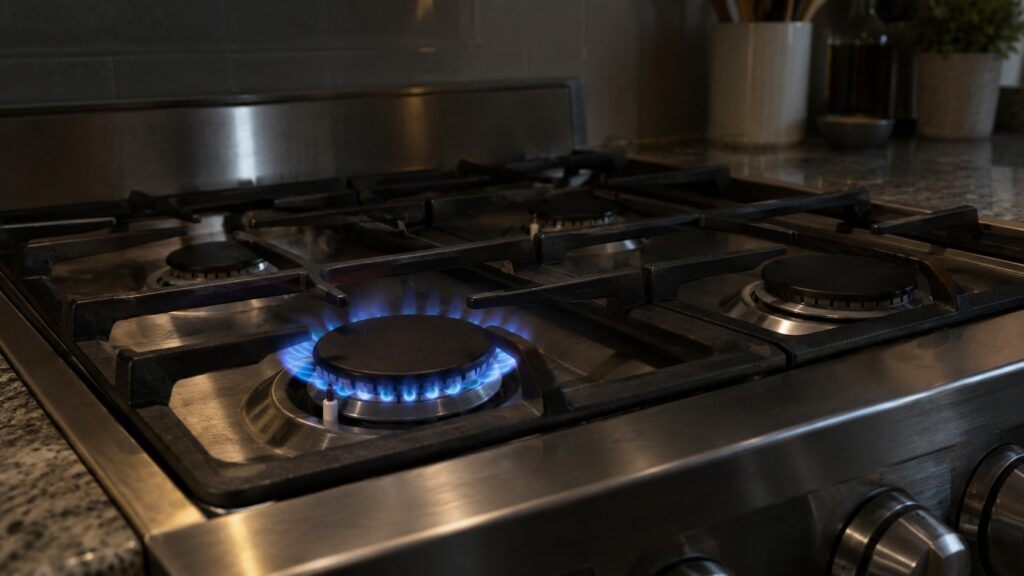
Three things happen almost at once. The knob opens a gas valve so gas flows to the burner. The same turn of the knob closes a small switch that tells the ignition module to start sparking. The module sends high-voltage pulses to the igniter, the small electrode beside the burner head, and a spark jumps across a gap. The spark meets the gas flowing out of the burner ports and the flame forms, usually within a second or two.
That is why you hear clicking as soon as you turn the knob past the off position: it is the module doing its job. On a healthy burner, the clicking stops soon after the flame appears. Dacor’s system for keeping a flame alive is described in our Perma-Flame glossary entry, and the points below explain the parts it relies on.
What is auto reignition, and when does it matter?
Auto reignition is the feature that relights a burner by itself. Gas flames can be blown out by a draft, an open window, a boiling pot or a very low simmer setting. Without reignition, gas would keep flowing unlit, which is dangerous. With it, the spark system senses the lost flame or continues sparking and relights the burner within a moment. You may see it as a brief click and a small flicker while something is boiling.
It matters most on low settings, where the flame is small and easy to disturb, and on burners designed for simmering. If a simmer burner keeps going out, the reason is usually a dirty or crooked cap, a clogged port or a damp igniter and not a gas shortage; see the page on a simmer burner that goes out. Our Dacor SimmerSear burner tips explain how to use the low setting in a way that keeps the flame stable.
Why does a burner click but not light?
If the module sparks and the burner does not light, one of the other two ingredients is missing: gas or contact. Gas may be blocked by clogged ports or a burner cap that is out of position, so the flame never reaches the spark. A damp cap or head does the same, because water in the ports blocks the gas. Alternatively the spark may be weak or in the wrong place, because the igniter is dirty or cracked. The page for a igniter that sparks with no ignition lists these causes, and the Dacor rangetop maintenance guide shows how to clean the parts that matter.
Do not keep trying if you smell gas. Turn the knob off, open a window, avoid switches and flames, leave the house if the smell is strong and call your gas company from outside.
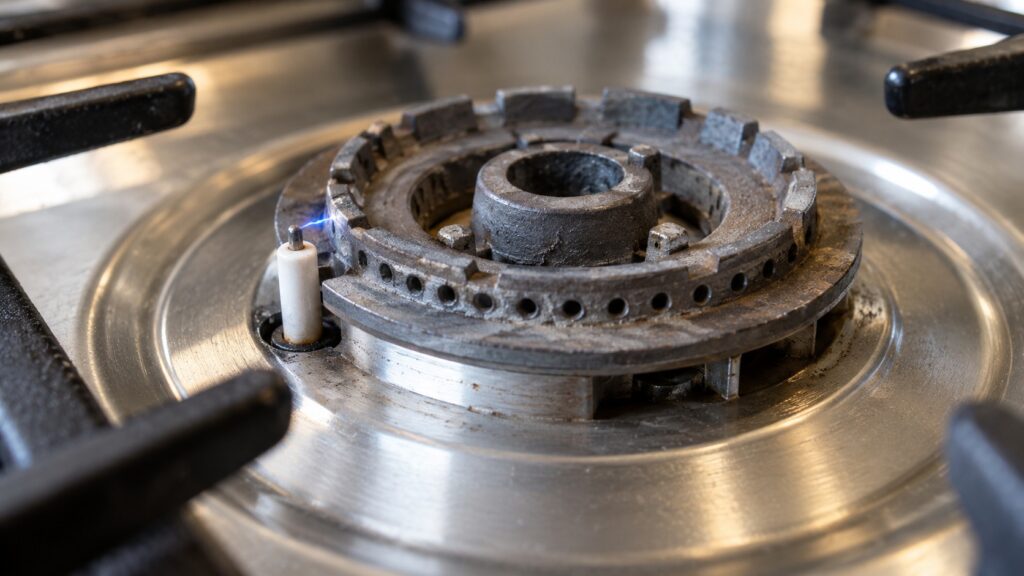
Why does a burner keep clicking after it has lit?
Clicking should stop once the flame is steady. If it continues, the system is still being told to spark. Common reasons are moisture around the igniter after a spill or a cleaning, a dirty electrode, a cap that sits crooked so the flame does not reach the sensing point, or a knob switch that does not release. Often a thorough clean and an hour of drying solves it. The page on continuous clicking after lighting goes through it, and the same logic applies when a rangetop sparks while all knobs are off, as described on the page for sparking when the burner is off.
A burner that clicks when it is wet usually settles after drying. One that clicks constantly while dry points to a stuck switch or a failing module, which needs a technician. The module sits near live wiring and gas fittings, so do not take it apart yourself.
What does a delayed ignition or a slow flame tell me?
A soft “whump” when the burner lights, or a flame that takes a moment to spread around the ring, means gas collected before the spark caught it. The usual culprits are clogged ports, a damp cap or a weak spark. The pages on delayed ignition bang and slow to reach full flame explain how to tell them apart. Cleaning the ports with a pin and drying the parts fixes most cases; if the bang is loud or repeated, stop using that burner and book service.
What if the whole system stops during a power outage?
The spark needs electricity. In a power outage, burners will not light with the knob in the normal way, and the manual describes how to light a burner with a match, which should be done carefully with the grate clear and the cap in place. Be careful when power returns: a knob left on during an outage will start sparking again, and gas will flow if the flame is not present. Turn every knob off before restoring power, as our Dacor power outage recovery guide advises.
When should I call a technician?
Call when a burner will not light after cleaning and drying, when clicking continues with the burner off, when you smell gas near the rangetop or when the flame is yellow or lifts from the burner. A technician can test the switch, the module and the igniter and check the gas supply safely. The Dacor rangetop repair page lists what a visit covers, and you can schedule a visit when you are ready.