
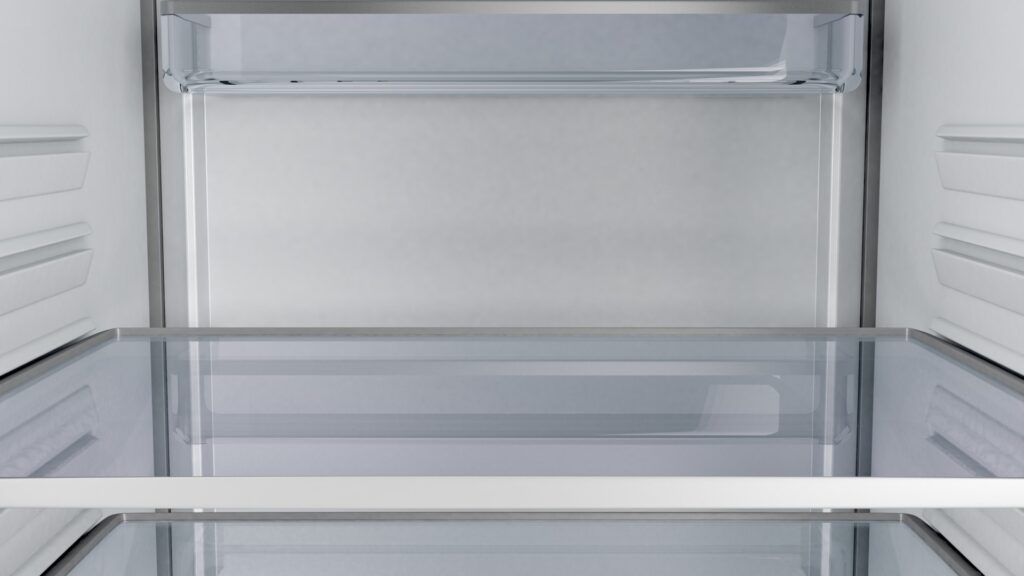
A Dacor SteelCool interior is a stainless steel cabinet lining rather than the molded plastic used in most refrigerators, and it is cared for differently. Stainless is durable, does not absorb odor and does not stain the way plastic does, but it shows fingerprints, it etches if the wrong thing is left on it, and it is cold enough to condense moisture in a way plastic does not. None of that is difficult — it just is not the same routine.
The routine, and why it is so short
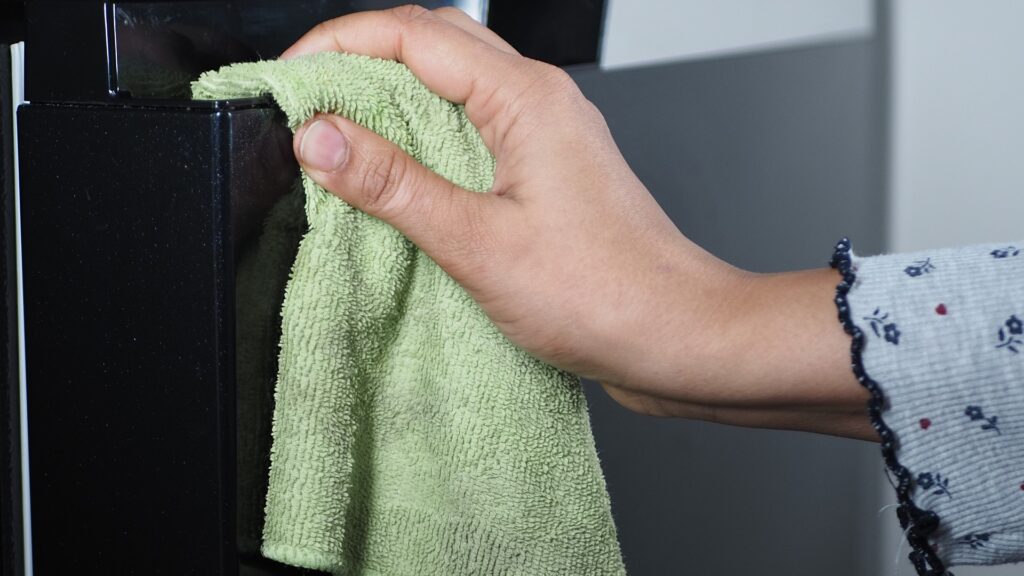
Most of the work is warm water and a soft cloth. Dish soap for anything greasy, then a rinse wipe with clean water so no detergent film is left, then dry with a soft towel. Drying is not optional on stainless — water spots and mineral marks come from water left to evaporate, not from the water itself.
Work along the grain. Stainless has a direction to its finish, and wiping across it leaves visible streaks even when the surface is clean. On interior panels the grain usually runs horizontally; check on a small area in good light before assuming.
Every few months, take out the shelves and drawers and wash them separately in the sink. Glass shelves with a steel trim need the trim dried properly, because water sits in the join and mineral deposits build there first.
What damages a stainless interior
- Chlorine. Bleach and chlorine-based cleaners pit stainless. The damage is permanent and looks like small dark freckles. This is the most common way a steel interior gets ruined.
- Abrasives. Scouring pads and powders scratch the finish and leave a dull patch that catches every subsequent mark.
- Acidic spills left sitting. Citrus juice, vinegar, tomato and brine all etch given time. Wipe them the same day.
- Salt. Dry salt from a leaking package holds moisture against the surface and causes pitting in the same way as chlorine.
- Adhesives. Tape and label residue removed with a solvent can take the passive layer with it. Warm soapy water and patience instead.
If pitting or etching has already happened, it cannot be polished out at home. It is cosmetic rather than functional, and the best response is to prevent more of it rather than to attack what is there.
Condensation, frost and what each means
A steel wall is a better conductor than a plastic one, so it runs slightly colder and shows moisture sooner. In humid weather, with a door opened often, a film of droplets on the back wall is normal and clears itself.
What is not normal is frost. A layer of frost building on an interior surface points at a defrost fault, a door not sealing, or airflow blocked by items pressed against the return. Our page on column refrigerator diagnosis covers the sequence, and it is worth following before assuming the compartment is simply set too cold.
Two habits reduce ordinary condensation: let hot food cool before it goes in, and keep containers closed. An uncovered dish of warm stock releases a surprising amount of moisture into a sealed cabinet, and it condenses on the coldest surface available.
Odor, and why a steel interior is easier
Plastic absorbs odor over years; stainless does not. If a steel-lined cabinet smells, the source is still present — a spill under a drawer, something behind a shelf, or a drain channel that needs clearing. That makes the problem findable, which is an advantage.
Check in this order: the drawer runners and the space under the drawers, the gasket folds, the drain channel at the back of the floor, and finally the drip tray area if the model has an accessible one. Clear the source, wash the area, dry it, and the smell goes with it. Deodorizers hide a source that is still there.
A seasonal routine that takes twenty minutes
Twice a year is enough for everything that is not a spill. Switch the compartment to its warmest setting or turn it off at the control, empty one section at a time so nothing spoils, and work through:
- shelves and drawers out, washed in the sink in warm soapy water, dried completely;
- walls, floor and ceiling wiped with warm soapy water, then with clean water, then dried along the grain;
- the drain channel at the back of the floor checked and cleared if the model has one;
- gasket folds cleaned and dried, and the dollar-bill test done at each corner;
- the condenser area checked for dust where the model gives access to it.
The last one is the item most often skipped and the one that costs the most when it is. A condenser blanketed in dust makes the compressor work longer for the same result, and the symptom is a cabinet that gradually stops holding temperature in warm weather — which reads as a failing appliance rather than as housekeeping.
The gasket, which is part of the interior
On panel-ready installations the door carries a cabinet panel and weighs considerably more than it looks. Hinges take that load for years, and a door that has settled slightly is the most common reason a seal that was fine starts letting warm air in at one corner. Our page on column refrigeration maintenance covers the broader schedule.
When to call
Call when frost builds inside despite correct settings, when the compartment will not hold temperature, when a door will not seal or has visibly dropped, when an odor persists after the source has been looked for, or when the interior lighting has failed.
We are an independent repair company and not a factory service arm. Pricing starts from a diagnostic visit and we confirm the estimate before any work begins. Dacor refrigerator repair covers compressors, fans, defrost systems, seals and controls, and you can schedule a visit online.