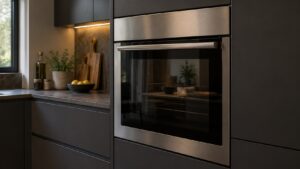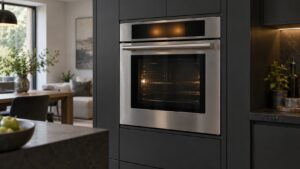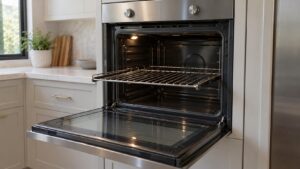
TL;DR: When you choose a Dacor wall oven, decide four things in order: the width of your cabinet opening (30 inches for the models listed on this site), single or double cavities, the style line (Modernist or Transitional) and whether you want connected features through SmartThings. Then check the electrical supply, because every one of these ovens needs a dedicated 240-volt circuit and a cutout built to the maker’s dimensions.
A wall oven is one of the longest-lived appliances in a kitchen and one of the hardest to change, because it sits inside custom cabinetry. A mistake in the choice shows up years later as a cutout that doesn’t fit, a panel that doesn’t match or a feature nobody uses. This Dacor wall oven buying guide covers the decisions in the order that matters, using the models listed on this site: the DOB30M977 and DOB30T977 families in single and double versions, and the older HWO130FS. It is written for buyers and for owners trying to work out which oven they already have.
How do I read a Dacor wall oven model number?
The model number holds most of the answers. The letters DOB at the start mark a Samsung-era wall oven, built after Samsung Electronics America completed its acquisition of Dacor in 2016. The 30 after it is the nominal width in inches. The next letter marks the style line: M for Modernist and T for Transitional. The digits after that are the series, and the letters that follow appear to mark single or double and the finish. Treat the style and series as a family label and confirm the details on the rating plate.
For more on how the pieces fit together, see how to read a Dacor model number and the glossary of Dacor style names. If you are unsure whether your oven is legacy or Samsung-era, which generation of Dacor you have settles it.
Should I buy a single or a double wall oven?
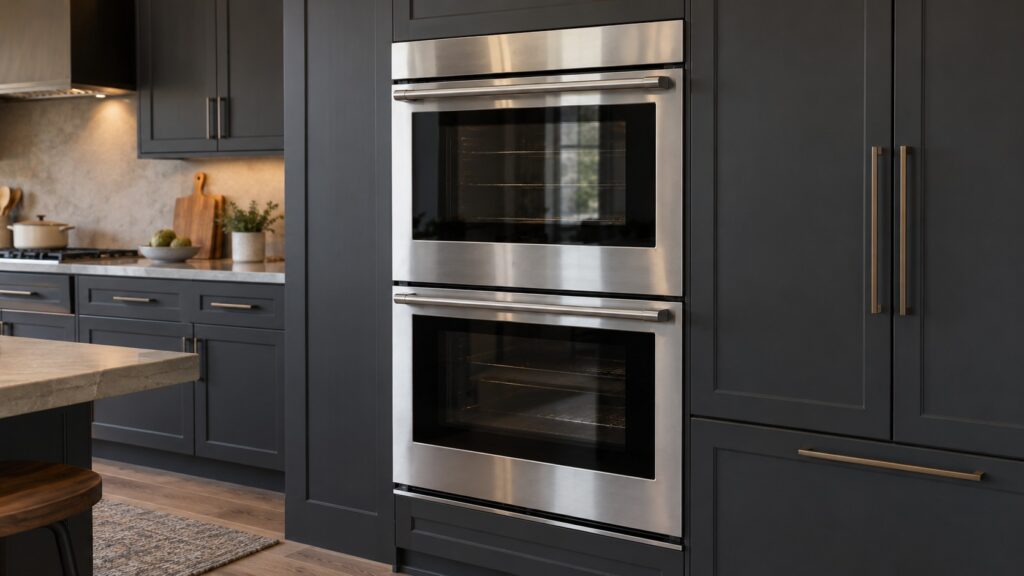
Choose by how you cook and how much wall you have. A single oven is the simplest, takes the least height and leaves room for a drawer or a microwave in the same run of cabinetry. A double adds a second cavity, which suits households that bake two things at different temperatures, and holiday cooks who want a separate space for a roast and the sides. The trade-off is height, weight and a bigger cutout, plus one control system running two cavities.
Do not assume a double is simply two singles stacked. The cutout is taller, the shelf support in the cabinet has to carry more weight, and the cabinet must be built or modified to suit. If you are replacing an old oven, the existing opening may suit a single and not a double, or the reverse. Measure height, width and depth, and compare them with the installation sheet for the model before you order.
Modernist or Transitional: what changes?
The style line mostly changes the look: handles, knobs, trim and finish. The Modernist line has a flatter, more contemporary face, while the Transitional line leans toward a more traditional look with the same basic function. Within the Samsung-era range, both use the same family of control architecture, which means they share the same style of codes when something goes wrong. Pick the one that matches your cabinetry and your other appliances, and look at both in person if you can.
What does not change with style is how the oven is serviced. A Samsung-era oven shows C-prefixed codes where a legacy oven shows F codes, and the two tables are not interchangeable. Our guide to Dacor oven F-codes versus C-codes explains the difference, which is useful to know before you buy a used or older oven.
Do I need a connected oven?
Samsung-era Dacor ovens can connect to SmartThings, which allows remote monitoring and some control from your phone. If you ask whether a Dacor built-in oven comes with Wi-Fi, the answer is that connected features arrived with the Samsung-era line, not the legacy ovens. Decide whether you will actually use them. Setting up and keeping a connection takes a little effort, and a router change can break it. Our Dacor connected appliance setup guide shows what is involved.
A feature worth asking about is the temperature probe, which lets the oven watch the food and not the clock. Our guide to the Dacor meat probe and the C-23 code explains how it works. If you want steam cooking, that is a separate type of oven; see the Dacor RealSteam oven buying guide.
What should I check before buying a wall oven?
Four checks protect you from the most common regrets. First, the electrical supply: a wall oven needs a dedicated circuit of the size the installation sheet specifies, and the cable must reach the junction box in the cabinet. Second, the cutout: compare your opening with the model’s dimensions in all three directions. Third, the ventilation and clearance requirements around the oven, which differ by model. Fourth, the route into the kitchen, since a wall oven is heavy and awkward, and a double is more so. Our guide on installing a Dacor wall oven goes through the installation in detail.
Think about care too. A wall oven that is cleaned and maintained avoids many problems, and our wall oven maintenance guide shows how. If you already have a Dacor and it is struggling, read oven won’t reach temperature before you start shopping, because a failed sensor is often a cheap repair. For older legacy ovens, repair or replace a legacy Dacor oven helps you weigh the options. When you need a technician, see Dacor oven repair or schedule a visit.