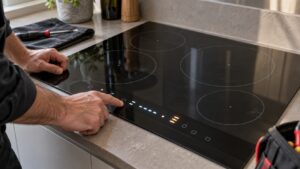
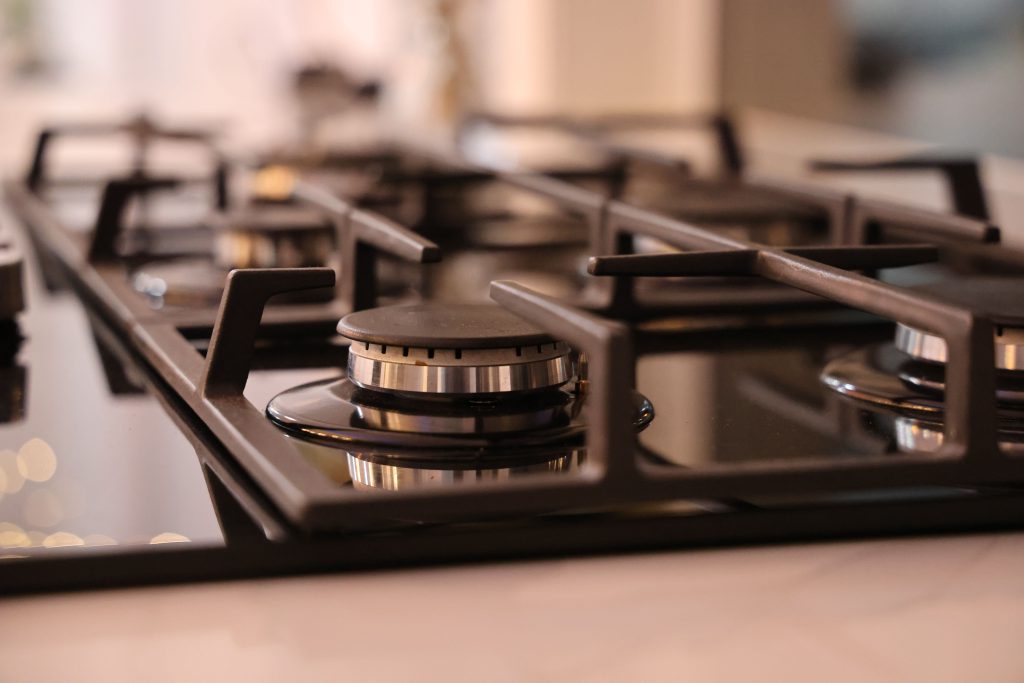
This Dacor cooktop buying guide compares Dacor’s two current cooktop fuel types — induction, led by the DTI36M977BB and DTI30M977BB, and gas, led by the DTG36P875NS and DTG30M954FS — across the practical factors that actually affect day-to-day cooking and repair.
Cookware requirements: the biggest practical difference
Induction only heats cookware a magnet sticks to — most cast iron and many stainless steel pans qualify, while aluminum, copper, and non-magnetic cookware will not heat at all on an induction zone. Gas has no such restriction, working with any cookware type. If your existing cookware collection is mostly aluminum or copper, that is worth weighing seriously before choosing induction, since it may mean replacing cookware alongside the cooktop.
Surface material and cleaning
Dacor’s current induction models run a frameless black-glass surface with no metal trim ring, requiring a dedicated ceramic-cooktop cleaner rather than abrasive pads to avoid dulling the glass over time. Gas models have burner grates and caps to remove and clean separately, a different maintenance routine entirely from wiping a flat glass surface.
Control and feedback style
Induction cooktops in this lineup offer immediate, precise temperature-style control through touch inputs, with instant response to adjustment. Gas cooktops offer the visual and tactile feedback of an actual flame, which many cooks prefer for judging heat level at a glance, alongside Illumina knobs that glow white to confirm a burner is active even at a low simmer setting.
Error-code tables differ meaningfully between the two
The induction platform is documented with a fuller nine-code table covering sensor failures (C0, C1, C2), communication problems (F0, F1, F2), a fan failure (A2), a voltage problem (UP), and a stuck-key problem (d0). The gas cooktop’s documented problem situation is comparatively thinner in this research, which is worth factoring in if extensive self-diagnostic feedback matters to you.
Installation and electrical considerations
Induction cooktops generally draw more electrical current than an equivalent gas cooktop’s electronic ignition and controls, which can matter if you are converting from a gas cooktop and the existing circuit was sized for gas-level electrical demand rather than induction’s higher draw.
Where to go from here
Our cooktop appliance page covers both fuel types in the current lineup, and our cooktop error codes page covers the documented problem tables. Dacor’s own site lists current cooktop specifications and pricing, and our scheduling page is available for an existing cooktop needing service.