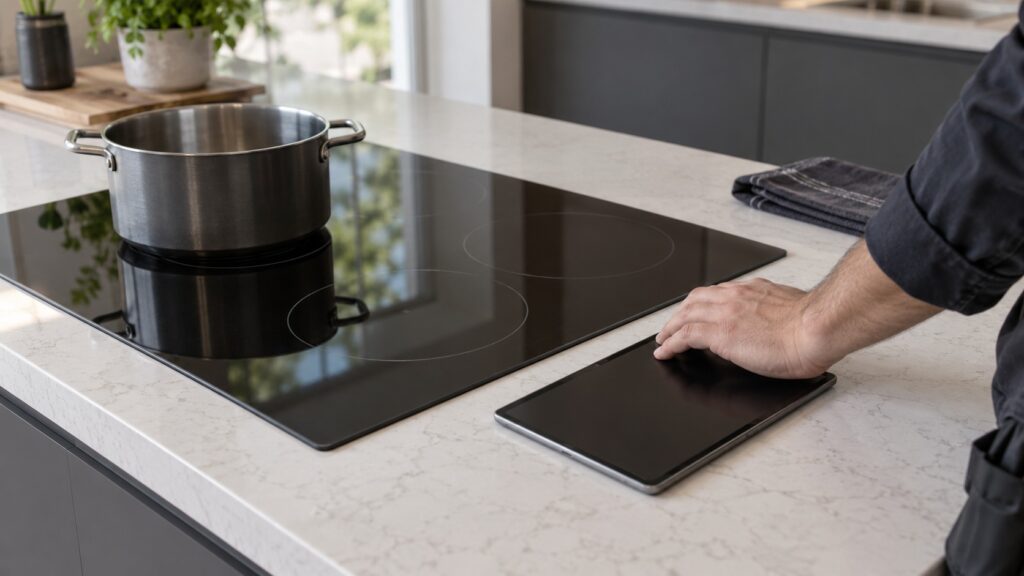
Repair a Dacor cooktop when the glass is intact and one part has failed: a gas igniter or knob switch, a single induction zone, a sensor or a fan. Replace it when the glass is cracked, the control and power electronics are failing together, the same communication code keeps returning or parts for your generation are hard to find. Check the cutout before you shop, because a different width means countertop work.
A cooktop is set into a countertop, wired or plumbed into the house and surrounded by cabinets, so replacing one is rarely as simple as swapping a box. That is why the question of Dacor cooktop repair or replace deserves a clear head. Some failures are small and cheap to fix, and a few are signs that the cooktop is done. This guide sets out which is which, covers gas and induction separately, explains what the Dacor codes tell you and shows what to compare before you commit. Models and generations differ, so use the table as a starting point and get a proper diagnosis for a close call.
Which Dacor cooktop problems are usually worth repairing?
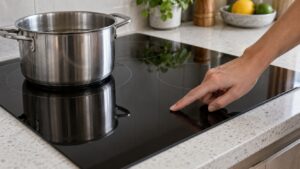
On a gas cooktop, the common faults are small. A burner that clicks but does not light often needs cleaning, drying or a new igniter. A knob switch that sticks, a cap that no longer seats and a loose knob are simple parts. The page on a burner that won’t light lists the checks. On an induction cooktop, a single zone that stops heating, a fan that fails or a sensor that misreads are part-level faults. If only one zone is dead, see one zone not heating before you assume the cooktop is finished.
These repairs have something in common: the rest of the cooktop is sound, the glass or the burner base is intact, and the cooktop worked well until the part failed. Fixing one part in that situation is almost always cheaper and less disruptive than a replacement that disturbs the countertop.
What do the Dacor cooktop codes say about a repair?
Codes help separate a small repair from a bigger one. The C0, C1 and C2 group relates to sensing, which often means a sensor or its wiring, and is covered in the Dacor cooktop C0, C1 and C2 sensor codes guide. The A2 and UP codes point to a fan or to a voltage problem, which the guide on A2 and UP explains. A voltage fault can come from the house wiring, not the cooktop, so check that before you pay for a part. The F0, F1 and F2 group covers communication failures between the control and the power electronics; see Dacor cooktop F0, F1 and F2 communication failures.
A code that is fixed by a part and does not return is the best news. A communication code that comes back after a repair, or that appears with several others, suggests a board problem, which can cost a large share of the price of a new cooktop. Keep a record of each code and the date, since a pattern is the strongest evidence for a replacement.
When does cracked glass or damage mean replacement?
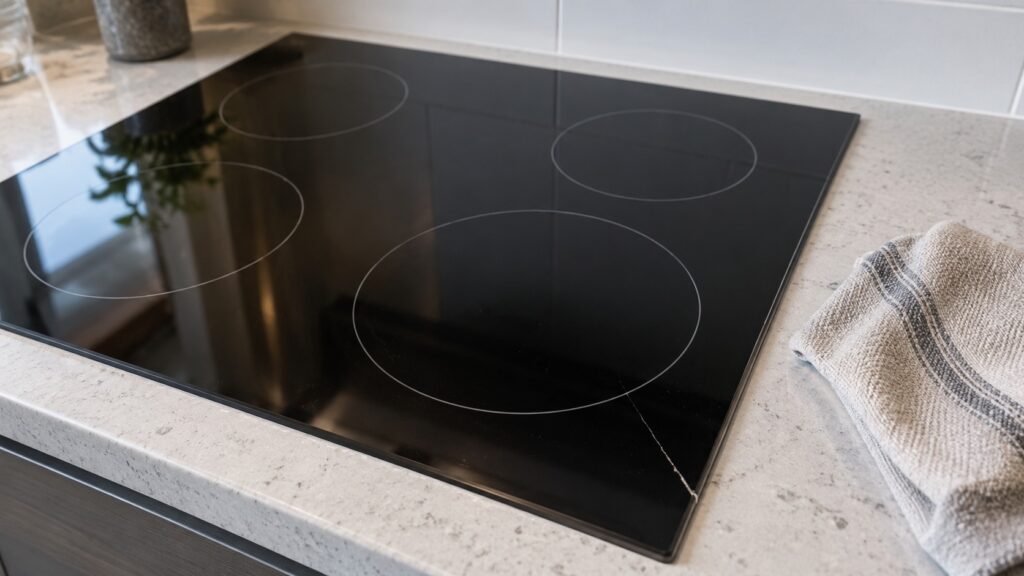
Cracked or shattered glass on an induction or radiant cooktop is a safety problem. Stop using the cooktop at once, switch off its breaker and keep liquid away from the cracks, because moisture can reach the electronics under the glass. A hairline crack still lets spills through. Sometimes the glass can be replaced on its own, but on many models the glass, coils and frame are a single assembly, and a replacement can approach the price of a new cooktop. The page for a cracked glass surface explains what to do first.
A gas cooktop with a warped base, severe corrosion or a leaking gas fitting is also a candidate for replacement, and any gas leak calls for the same response: no flames or switches, windows open, leave the house and call your gas company from outside.
How much does age and generation matter?
A well-kept cooktop can last a decade or more, and age alone is not a reason to replace. What matters is parts availability and how many things have gone wrong. Dacor has produced cooktops in more than one generation, and older generations can have harder-to-find parts. Our guide on which generation of Dacor you have shows how to tell yours, and the legacy and Samsung-era repair guide explains how repair differs between them.
As a rule of thumb, if the repair costs more than about half of a comparable new cooktop, and the cooktop is already past its middle years, replacement is the better value. If it is younger and the fault is one part, repair. For a view across all your appliances, repair or replace a Dacor appliance covers the general framework.
What should I compare if I decide to replace it?
Measure the existing cutout and compare it with the installation sheet of any candidate. A cooktop of the same width and depth keeps the countertop untouched. If you are considering a switch from gas to induction, you also need a 240-volt circuit and magnetic cookware, and the gas line must be capped safely. Our Dacor cooktop buying guide and the induction cooktop model guide help you choose, and the cooktop repair cost guide explains what drives a quote.
How do I get a fair diagnosis?
Before the visit, note the model and serial numbers, the exact symptom and any codes. Do not keep running a cooktop that sparks, smells or shows a crack. We are an independent service, so the advice does not depend on selling you a replacement. The Dacor cooktop repair page shows what a visit covers, and you can schedule a visit online.